
June 2010

If it walks like a duck, talks like a duck (Donald, friend of Mickey?…Ok, just go with it), and quacks like a duck…it must be a duck.

So, if it looks like a yacht, sounds like a yacht, but doesn’t have engines and is in a dry-dock, is it a vessel for the purposes of the maritime lien statute, and more importantly, for in rem jurisdiction?

A new admiralty case from the Eleventh Circuit Court of Appeals answers this question:  YES.  The case is Crimson Yachts v. Betty Lyn II Motor Yacht and can be found here.

Practitioners Note:  This case has a very comprehensive history of the Maritime Lien Act, 46 U.S.C. §§ 31341–31343.

The facts of this case are simple.  Yacht goes into dry-dock for extensive renovations.  After some time and repairs, the owner stops paying.  So, is a high and dry yacht, without engines, props, furniture, generators, etc still a vessel for the purposes of the maritime lien act and in rem jurisdiction?

The court explained the applicable test:

In deciding whether a watercraft is a vessel, “the focus . . . is the craft’s capability, not its present use or station.” Bd. of Comm’rs of the Orleans Levee Dist. v. M/V Belle of Orleans, 535 F.3d 1299, 1310 (11th Cir. 2008). The dispositive question is “whether the watercraft’s use as a means of transportation on water is a practical possibility or merely a theoretical one.” Id. (quoting Stewart, 543 U.S. at 496, 125 S. Ct. at 1118) (quotation marks omitted); Cain v. Transocean Offshore USA, Inc., 518 F.3d 295, 300 (5th Cir. 2008); see also Holmes v. Atlanta Sounding Co., 437 F.3d 441, 448 (5th Cir. 2006) (“Under § 3, a ‘vessel’ is watercraft practically capable of maritime transportation regardless of its primary purpose or state of transit at a particular moment(quotations omitted)).

So, despite removal of her engines and the renovations, the yacht remained a vessel.  Ergo, the Maritime Lien statute applied and the dry-dock was entitled to arrest the vessel in rem to satisfy its lien.
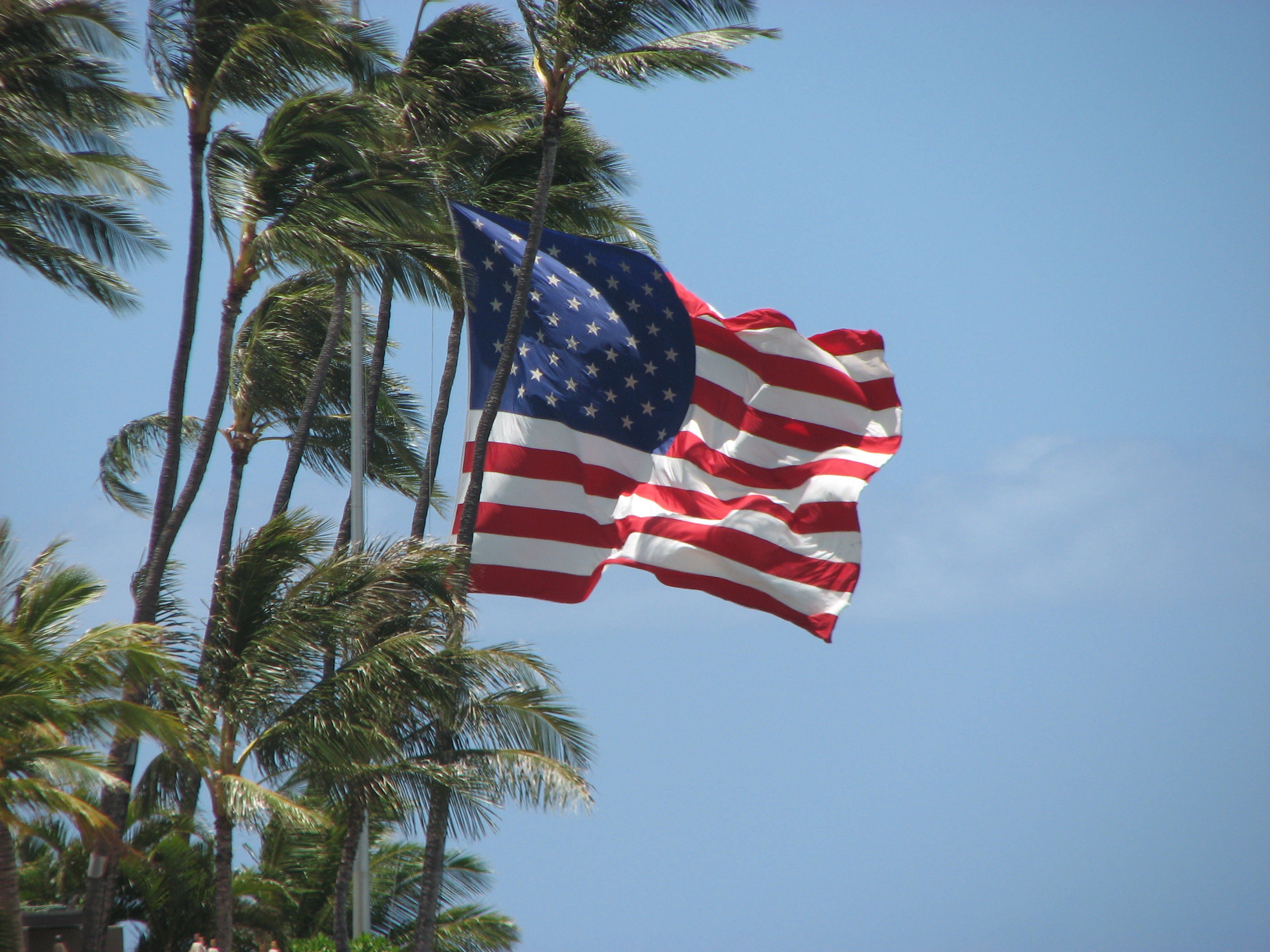
Governor Lingle signed HB1808 into law today.  Her message is available here. My earlier post on this bill is here.

From my earlier post:

SECTION 1. The legislature finds that there are many shoreline areas throughout the state where the overgrowth of vegetation inhibits lateral access and transit along the beach, thereby denying the public of use and enjoyment of the public domain. The area seaward of' the shoreline is part of the State's conservation district and is regUlated by the department of land and natural resources. Although natural vegetative overgrowth exists along beach areas, there is also evidence in many areas of vegetative overgrowth into the beach area induced or cultivated by private property owners. The department does not have the funding nor should it be financially responsible for the removal of induced or cultivated vegetation by private landowners which interfere or encroach seaward of the shoreline.

The legislature further finds that beach transit corridors are similar to public sidewalks in the sense that they are for public use. To maintain beach transit along the shoreline, provisions similar to those  pertaining to the maintenance of sidewalks are needed when induced or cultivated vegetation interferes or encroaches into the beach transit corridor.

The purpose of this Act is to reaffirm a longstanding public policy of extending to public use and ownership as much of Hawaii's shoreline as is reasonably possible by ensuring the public's lateral access along the shoreline, by requiring the removal of the landowners' induced or cultivated vegetation that interferes or encroaches seaward of the shoreline.

The bill also purports to criminalize the failure of a landowner to maintain vegetation that encroaches on the access areas. 

Interesting twist.  The bill defines says that land seaward of the property boundary is the beach transit corridor. And, provides:

However, in areas of cliffs or areas where the nature of the topography is such that there is no reasonably safe transit for the public along the shoreline below the private property lines, the counties by condemnation [shall] may establish along the makai boundaries of the property lines public transit corridors which shall be not less than six feet wide.

(b) Along beach transit corridors where the abutting landowner's human-induced, enhanced, or unmaintained vegetation interferes or encroaches with beach transit corridors, the department of land and natural resources may require the abutting landowner to remove the landowner's interfering or encroaching vegetation. "

So, the counties (which typically do not have an ownership stake in the shoreline) may condemn "along the makai boundaries" to make a corridor? 

One to watch.  It'll be interesting to see how the State DLNR and the counties handle this.