
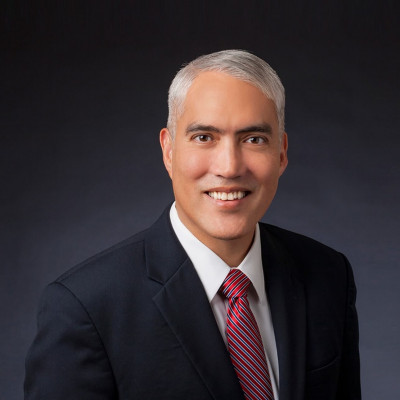
Photo of Mark M. Murakami

Mark Murakami practices in the firm’s Appeals, Business & Commercial Law, Construction Law, Land Use & Eminent Domain, Litigation & Dispute Resolution, Real Estate, and Wills, Trusts & Estates practice groups. His focus is on complex commercial disputes, land use negotiation and litigation, environmental, and general civil litigation. He has appeared in all federal and states courts in Hawaii, most of the administrative boards and commissions, and is licensed in the U.S. Supreme Court, Ninth Circuit Court of Appeals and Court of Federal Claims. He is rated “BV” by Martindale-Hubbell, receiving a rating of 4.4/5.0.

Mark is the 2025 President of the Hawaii State Bar Association (HSBA). Hawaii’s attorneys selected Mark for this leadership role in a statewide election in late 2022. He subsequently served as the 2023 Vice President and 2024 President-Elect. Founded in 1899, the HSBA is a mandatory professional organization for active and inactive licensed attorneys in Hawai. Its mission is to unite and inspire Hawaii’s lawyers to promote justice, serve the public and improve the legal profession. Mark was first elected by his peers to the 21-person HSBA Board in 2012 and was elected Treasurer from 2014 to 2017.

Mark has been appointed to a leadership position in the American Bar Association Section of Litigation. He will serve as Co-Chair for the Real Estate, Condemnation & Trust Litigation Committee and will be responsible for programming and publications for the nationwide membership.

Mark has been elected as the Hawaii member of Owners’ Counsel of America (OCA), an exclusive association of the nation’s leading eminent domain lawyers. Eminent domain is the legal process by which the government acquires private property for public uses, most often by forcing the owner to sell it. Membership in OCA is by invitation-only, and limited to a single member in each state. Members are selected for their experience and dedication in defending the constitutional rights of private property owners in eminent domain, inverse condemnation, regulatory takings, and other property rights matters.

Mark was elected a Fellow of the American College of Real Estate Lawyers (ACREL). Admission to the College is by invitation only to lawyers who are distinguished real estate practitioners and who have contributed to the improvement of real estate law through a combination of speaking, writing, teaching, and serving on relevant boards and commissions. Founded in 1978, the College is comprised of more than 1,000 lawyers distinguished for their skill, experience, and high standards of professional and ethical conduct in the practice of real estate law.

Mark was awarded the CRE (Counselor of Real Estate) credential by The Counselors of Real Estate, an international association of experienced real estate practitioners including appraisers, lawyers, and brokers, who provide expert advisory services to clients on complex real property and land-related matters. Membership in The Counselors of Real Estate is selective and is extended by invitation only, attesting to the practitioner’s expertise and proven competence in his or her chosen area of real estate.

Mark once again was selected by his peers for inclusion in the 2025 Edition of The Best Lawyers in America® for his work in Commercial Litigation, Eminent Domain & Condemnation Law, Land Use & Zoning Law, Litigation-Land Use & Zoning, Real Estate Law, Trusts & Estates, Litigation-Real Estate, and Litigation-Trusts & Estates. He was also named the Best Lawyers® 2013 Lawyer of the Year Eminent Domain & Condemnation Law. Mark has been selected by Super Lawyers for over 10 years.

Mark was the Valedictorian of the Class of 1999 from the University of Hawaii at Manoa, William S. Richardson School of Law where he served as Articles Editor of the University of Hawaii Law Review. He has received numerous academic awards, including: Dean’s Scholar, Porter Scholastic Award (2 times); Awards for highest grade in Property I, Torts I, Contracts I, Corporations, and Professional Responsibility; Kono Award for Academic Achievement; Phi Delta Phi Professional Responsibility Award; HSBA Real Property and Financial Services Section Award.

He is also a graduate of the U.S. Coast Guard Academy in New London, Connecticut. He served for 13 years on active duty before joining the U.S. Coast Guard Reserve in 2005. During his time on active duty, he served on three different Coast Guard cutters, including command of a patrol boat in California. He spent four years assigned to the Fourteenth Coast Guard District Legal Office, prosecuting courts-martial, litigating cases in federal court as a Special Assistant U.S. Attorney, and advising Coast Guard officials on maritime, criminal, environmental and international law issues.

Mark has been awarded the Legion of Merit, the Defense Meritorious Service Medal, two Meritorious Service Medals, the Joint Service Commendation Medal, two Coast Guard Commendation Medals and four Coast Guard Achievement Medals. He retired in July 2022 as a Captain, culminating thirty years of active duty and reserve commissioned service.

To view his blog on federal litigation and maritime law, in and around Hawaii and Oceania, please visit: www.hawaiioceanlaw.com.

Mark was born on Maui and raised in Kailua, Oahu. He is a graduate of Kailua High School and was active in the Castle Performing Arts Center.

U.S. District Judge Helen Gillmor has denied an application for a temporary restraining order sought by Hawaii Superferry opponents.  The opponents had filed a federal lawsuit seeking to enjoin the Coast Guard from enforcing a security zone at Kauai’s Nawiliwili Harbor.

The temporary security zone (effective from Sep. 1, 2007 through Oct. 31, 2007) is located in the Federal Register (33 CFR Part 165) and is posted here.  The rule’s Summary:

The Coast Guard has created a security zone in the waters of Nawiliwili Harbor, Kauai, and on the land of the jetty south of Nawiliwili Park, including Waapa Road. This zone is intended to enable the Coast Guard and its law enforcement partners to better protect people, vessels, and facilities in and around Nawiliwili Harbor in the face of non-compliant protesters who have impeded passage of the Hawaii Super Ferry to its dock in the harbor. This rule complements, but does not replace or supersede, existing regulations that establish a moving 100-yard security zone around large passenger vessels like the Hawaii Super Ferry.

The Coast Guard had been recently, and undoubtedly reluctantly, brought into the ongoing Superferry controversy (part of which is explained by my colleague Robert Thomas, here) after the Superferry made its initial voyages to Kauai in August.   As explained in the "Background" section of the temporary rule:

On August 26 and 27, 2007, protesters impeded the passage of the Super Ferry Hawaii Super Ferry into and through Nawiliwili Harbor by entering the water from the land and waterfront facilities adjacent to the harbor, often with kayaks, surfboards, and other small vessels, and then swimming into and blocking the harbor’s navigable channel.  In addition, several hundred onlookers watched the unfolding events from land adjacent to the harbor. Most of these observers were on the jetty that is south of Nawiliwili Park, which is adjacent to the Madsen shipping facility in Nawiliwili Harbor (hereinafter referred to as ‘‘Nawiliwili Jetty’’). Some of these onlookers threw rocks and bottles at Coast Guard personnel who were conveying detained protesters to shore on August 26. Most of the protesters doing so from Nawiliwili Jetty. 

The transit of the entrance into Nawiliwili harbor is difficult for large vessels in all but calm weather. The turn around the outer breakwater, then immediately turning in the opposite direction around the inner jetty is made more difficult by the combined effects of the winds and seas. Due to the difficulty of maneuvering in the small area of Nawiliwili, and in the interest of ensuring the safety of the protesters, the Hawaii Super Ferry’s master chose not to enter the channel until the Coast Guard had cleared the channel of protesters. However, because the vessel remained outside the harbor, and because the protesters did not approach to within 100 yards of the vessel, the existing security zone (see 33 CFR 165.1410) did not provide the Coast Guard with the authority to control protestor entry into Nawiliwili Harbor or clear the channel of protesters before the Hawaii Super Ferry commenced its transit into the harbor. The resulting situation substantially complicated an already difficult transit and created a substantial risk of damage and injury.

The plaintiffs’ First Amended Complaint is posted here, the Memorandum in Support of the Application for TRO is posted here.

Judge Gillmor’s decision denying the Temporary Restraining Order can be downloaded here.  Exhibit A to the Order is the graphic of the security zone. 

The Coast Guard has also proposed another rule to continue the security zone until December 31, 2007, which is provided here .