
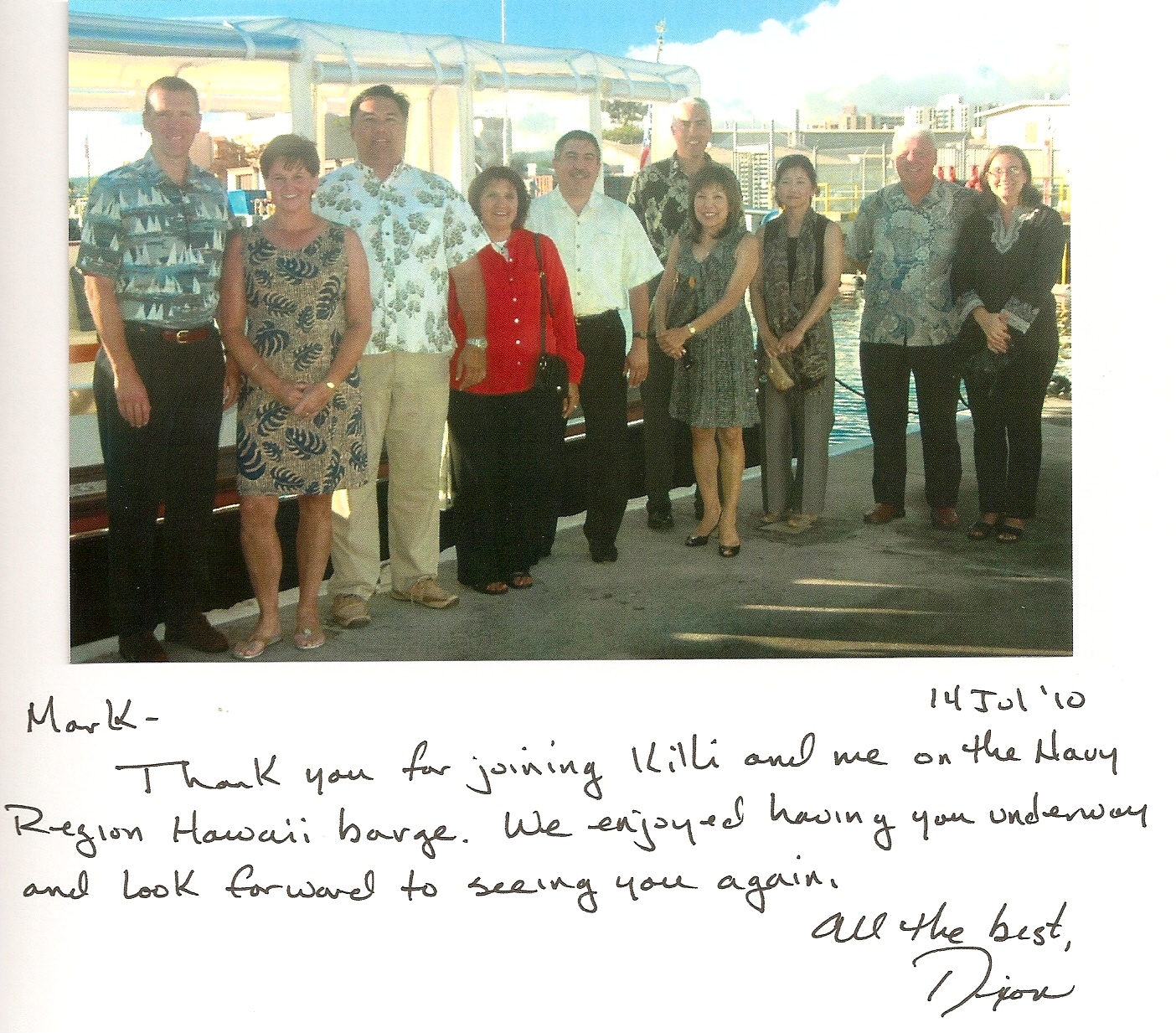
New Admiralty Case from Fifth Circuit – Osprey Ship Mgmt. v. Foster
New case from the Fifth Circuit Court of Appeals. The case is Osprey Ship Mgmt. v. Foster, 2010 U.S. App. LEXIS 135410, can the original opinion can be found here.
Facts: Ship being navigated by a Pilot allides with a submerged structure, outside of the navigable channel which was marked by a privately maintained buoy. At trial, the owner argued that the United States is liable for the allision because of a nautical chart error. The owner also sought liability against the pilot association. The Pilot and Captain are found equally negligent for the allision.
Appeal: On appeal, the Fifth Circuit resoundingly rejects the claim against the United States, criticizing the vessel’s owner’s “disingenuous, if not misleading” citation to a government manual. Typically, governmental discretionary acts which result in damages cannot be sued upon. The “discretionary function” immunizes such government action from litigation.
Second, the vessel owner challenged, then conceded, the liability of the pilot’s association.
On the Pilot’s appeal from the adverse decision, Pilot argued that the trial court made several erroneous findings of fact. The appeals court began by stating that Pilots are held to an “unusually high standard of care.” Citing this high standard of care, the appeals court affirmed the trial court’s finding that the Pilot did not exercise the standard of care in navigating the vessel:
Even if it were true that it was common knowledge that staying west of Red Buoy 2
would keep a vessel west of LW1, the district court was not clearly erroneous in
finding that Pilot Foster nevertheless understood that floating navigational aids
should not be relied upon to the exclusion of other navigational aids because they
can float or move at any time, and in finding that given his knowledge of the
river and of the location of LW1 (which his father, a local pilot, had hit with a
vessel previously) it was negligent to bring the vessel out of the improved
channel and so close to Red Buoy 2.Citing to his dad’s collision with the same buoy at issue in this case? Ouch.
The final point on appeal was that the Pilot and Captain should not be liable because the submerged structure (that was hit) was longer than its permit allowed. The trial court and appeals court found that the cause of this allision was not the length of the structure but the navigation of the vessel outside the marked channel.
SCOTUS Decides Chicago Gun Case – Slaughterhouse Left Undisturbed
The U.S. Supreme Court handed down its decision in McDonald v. City of Chicago today. The opinion is here (it is a whopper, so don't reflexively print) and my resource page with briefs, news and analysis is here.
Most important element first: Slaughterhouse was NOT overruled. Justice Alito, writing for the majority said:
As previously noted, the Seventh Circuit concluded that Cruikshank, Presser, and Miller doomed petitioners’claims at the Court of Appeals level. Petitioners argue,however, that we should overrule those decisions and hold that the right to keep and bear arms is one of the “privi-leges or immunities of citizens of the United States.” In petitioners’ view, the Privileges or Immunities Clause protects all of the rights set out in the Bill of Rights, as well as some others, see Brief for Petitioners 10, 14, 15–21, but petitioners are unable to identify the Clause’s full scope, Tr. of Oral Arg. 5–6, 8–11. Nor is there any consen-sus on that question among the scholars who agree that the Slaughter-House Cases’ interpretation is flawed. See Saenz, supra, at 522, n. 1 (THOMAS, J., dissenting).
We see no need to reconsider that interpretation here. For many decades, the question of the rights protected bythe Fourteenth Amendment against state infringement has been analyzed under the Due Process Clause of that Amendment and not under the Privileges or Immunities Clause. We therefore decline to disturb the Slaughter-House holding.
Fear of the unknown. Reversing Slaughterhouse, despite its ill conceived rationale, would thrust constitutional law into a state of flux. Better the devil you know? [That being said, this is why we have courts]. More to follow after I've read.
Governor Lingle Signs Shoreline Definition Bill
Governor Lingle signed HB1808 into law today. Her message is available here. My earlier post on this bill is here.
From my earlier post:
SECTION 1. The legislature finds that there are many shoreline areas throughout the state where the overgrowth of vegetation inhibits lateral access and transit along the beach, thereby denying the public of use and enjoyment of the public domain. The area seaward of' the shoreline is part of the State's conservation district and is regUlated by the department of land and natural resources. Although natural vegetative overgrowth exists along beach areas, there is also evidence in many areas of vegetative overgrowth into the beach area induced or cultivated by private property owners. The department does not have the funding nor should it be financially responsible for the removal of induced or cultivated vegetation by private landowners which interfere or encroach seaward of the shoreline.
The legislature further finds that beach transit corridors are similar to public sidewalks in the sense that they are for public use. To maintain beach transit along the shoreline, provisions similar to those pertaining to the maintenance of sidewalks are needed when induced or cultivated vegetation interferes or encroaches into the beach transit corridor.
The purpose of this Act is to reaffirm a longstanding public policy of extending to public use and ownership as much of Hawaii's shoreline as is reasonably possible by ensuring the public's lateral access along the shoreline, by requiring the removal of the landowners' induced or cultivated vegetation that interferes or encroaches seaward of the shoreline.
The bill also purports to criminalize the failure of a landowner to maintain vegetation that encroaches on the access areas.
Interesting twist. The bill defines says that land seaward of the property boundary is the beach transit corridor. And, provides:
However, in areas of cliffs or areas where the nature of the topography is such that there is no reasonably safe transit for the public along the shoreline below the private property lines, the counties by condemnation [shall] may establish along the makai boundaries of the property lines public transit corridors which shall be not less than six feet wide.
(b) Along beach transit corridors where the abutting landowner's human-induced, enhanced, or unmaintained vegetation interferes or encroaches with beach transit corridors, the department of land and natural resources may require the abutting landowner to remove the landowner's interfering or encroaching vegetation. "
So, the counties (which typically do not have an ownership stake in the shoreline) may condemn "along the makai boundaries" to make a corridor?
One to watch. It'll be interesting to see how the State DLNR and the counties handle this.
https://www.surfandturflaw.com/2010/06/memorial-day-2010-view-of-the-outrigger-canoe-club-at-waikiki-beach.html
Memorial Day 2010, View of the Outrigger Canoe Club at Waikiki Beach.
https://www.surfandturflaw.com/2010/01/headed-to-the-american-socty-of-intl-law-luncheon-on-friday-to-hear-from-lt-col-dan-mori-usmc-on-his-experiences-with-gua.html
Headed to the American Socty of Int'l Law luncheon on Friday to hear from Lt. Col. Dan Mori, USMC, on his experiences with Guantanamo military commissions.
Amicus Briefs Filed in SCOTUS Maritime Bill of Lading Case
We had earlier posted about the U.S. Supreme Court agreeing to hear that case of Kawasaki Kisen Kaisha v. Regal-Beliot Corp., Docket No. 08-1553 and Union Pacific Railroad Co., v. Regal-Beliot Corp., Docket No. 08-1554. For you non-admiralty wonks, this case is about the interplay between federal law governing liability for cargo transported
McDonald v. Chicago – New Op-Ed in Washington Times
I was initially intrigued by the prospect that a newspaper would grasp the implications of the McDonald v. Chicago case beyond gun rights. Then, I noticed it was an Op-Edwritten by authors of an amicus brief.
Nevertheless, the piece is interesting because it does raise the what-if concerns if the Supreme Court overturns the
McDonald v. Chicago – More Briefs and Posts
Another Amicus brief has been filed supporting the Petitioner in the McDonald v. City of Chicago case, resource page here. The Cato Institute and Pacific Legal Foundation filed a brief here.
Their conclusion sums up their position well:
The Slaughter-House Cases was wrong when it was decided. It ignored the fundamental change in constitutional order
McDonald v. City of Chicago: Resource Page
Decision
U.S. Supreme Court decision
Oral Argument Trancript
Presentations
American Bar Association’s Section on State and Local Government Law – CLE Teleconference, Feb. 25, 2010 at 1:30 p.m. Eastern. Announcement and signup are available on the ABA website, here.
Case Background
The U.S. Supreme Court has agreed to hear a case that has the potential to re-write over 100 years of 14th Amendment jurisprudence. The case is McDonald v. City of Chicago, No. 08-1521 (cert granted Sept. 30, 2009).
The Fourteenth Amendment states:
All persons born or naturalized in the United States and subject to the jurisdiction thereof, are citizens of the United States and of the State wherein they reside. No State shall make or enforce any law which shall abridge the privileges or immunities of citizens of the United States; nor shall any State deprive any person of life, liberty or property, without due process of law; nor deny to any person within its jurisdiction the equal protection of the laws.
Question Presented
The Question Presented is: Whether the Second Amendment right to keep and bear arms is incorporated as against the States by the Fourteenth Amendment’s Privileges or Immunities or Due Process Clauses.
Decision Below:
The Court of Appeals for the Seventh Circuit decision is here.
Merits Briefs (Courtesy of the ABA)
Petitioner’s Opening Brief
Respondent National Rifle Association’s Brief in Support of Petitioner
Respondent City of Chicago’s Answering Brief
Respondent NRA’s Reply Brief
Petitioner’s Reply Brief (courtesy of www.chicagoguncase.com)
Amicus Briefs (Courtesy of the ABA)
Amicus Cato Institute and Pacific Legal Foundation’s Brief in Support of Petitioner
Amicus Madison Society, et al.’s Brief in Support of Petitioner
Amicus< P> Paragon Foundation’s Brief in Support of Petitioner
Amicus Rutherford Institute’s Brief in Support of Petitioner
Amicus Heartland Institute’s Brief in Support of Petitioner
Amicus Buckeye Firearms Foundation Inc.’s Brief in Support of Petitioner
Amicus State Legislators’ Brief in Support of Petitioner
Amicus Professors of Philosophy, Criminology, Law and Other Fields’ Brief in Support of Petitioner
Amicus Senator Kay Bailey Hutchison, et al. Brief in support of Petitioner
Amicus Foundation for Moral Law’s Brief in Support of Petitioner
Amicus National Shooting Sports Foundation, Inc.’s Brief in Support of Petitioner
Amicus Jews for Preservation of Firearms Ownership’s Brief in Support of Petitioner
Amicus Arms Keepers’ Brief in Support of Petitioner
Amicus Academics for the Second Amendment’s Brief in Support of Petitioner
Amicus Center for Constitutional Jurisprudence’s Brief in Support of Petitioner
Amicus American Center for Law and Justice’s Brief in Support of Petitioner
Amicus Maryland Arms Collectors’ Assn., Inc.’s Brief in Support of Petitioner
Amicus Calguns Foundation, Inc.’s Brief in Support of Petitioner
Amicus Thirty-Four California District Attorneys, et al.’s Brief in Support of Petitioner
Amicus American Legislative Exchange Council’s Brief in Support of Petitioner
Amicus Goldwater Institute Scharf-Norton Center for Constitutional Government, et al.’s Brief in Support of Petitioner
Amicus NAACPLegal Defense and Educational Fund, Inc.’s Brief in Support of Neither Party
Amicus Insitute for Justice’s Brief in Support of Petitioner
Amicus Safari Club Int’l’s Brief in Support of Petitioner
Amicus Gun Owners of America, Inc., et al.’s Brief in Support of Petitioner
Amicus Eagle Forum Education and Legal Defense’s Brief in Support of Petitioner
Amicus International Law Enforcement Educators and Trainers Assn, et al.’s Brief in Support of Petitioner
Amicus Women State Legislators and Academics’ Brief in Support of Petitioner
Amicus States of Texas, et al.’s Brief in Support of Petitioner
Amicus Rocky Mountain Gun Owners, et al.’s Brief in Support of Petitioner
Amicus Constitutional Law Professors’ Brief in Support of Petitioner
Amicus State Firearm Associations’ Brief in Support of Petitioner
Amicus American Civil Rights Union, et al.’s Brief in Support of Petitioner
Amicus Brady Center to Prevent Gun Violence, et al.’s Brief in Support of Neither Party
Amicus Educational Fund to Stop Gun Violence’s Brief in Support of Respondent
Amicus Anti-Defamation League’s Brief in Support of Respondent
Amicus Representatives Carolyn McCarthy, Mike Quigley, and 53 Other Congress Members of the United States Congress Brief in Support of Respondent
Amicus English/ Early American Historians Brief in Support of Respondents (reprint)
Amicus Professors of Criminal Justice Brief in Support of Respondents
Amicus American Cities, Cook County, Illinois, and Police Chiefs Brief in Support of Respondents
Amicus United States Conference of Mayors Brief in Support of Respondents
Amicus Organizations Committed to Protecting the Public’s Health, Safety, and Well-Being’s Brief in Support of Respondent
Amicus States of Illinois, Maryland, and New Jersey Brief in Support of Respondent
Amicus Historians and Legal Scholars Brief in Support of Respondent
Amicus Thirty-Four Professional Historians and Legal Historians Brief in Support of Respondents
Amicus Historians on Early American Legal Constitutional and Pennsylvania History Brief in Support of Respondent
Amicus (if motion granted) Law Professor and Students Brief in Support of Respondent
Amicus Association of Prosecuting Attorneys and District Attorneys Brief in Support of Respondent
Amicus Villages of Winnetka and Skokie, Illinois, the City of Evanston, Illinois, the Illinois Municipal League, and the International Municipal Lawyers Association Brief in Support of Respondent
Amicus Board of Education of The City of Chicago, the Institute of Medicine of Chicago, Wayman African Methodist Episcopal Church of Chicago, the Illinois Council Against Handgun Violence, Legal Community Against Violence, Violence Policy Center, States United to Prevent Gun Violence, Freedom States Alliance, Connecticut Against Gun Violence, Maine Citizens Against Gun Violence, Citizens for a Safer Minnesota, Ohio Coalition Against Gun Violence, Wisconsin Anti-Violence Effort Educational Fund, and Gunfreekids.Org Brief in Support of Respondent
Amicus Oak Park Citizens Committee for Handgun Control Brief in Support of Respondent
Cert Petition Stage
Pleadings (courtesy of SCOTUSBLOG)
Precedent
Scholarly Publications
Ilya Shapiro, Opening Pandora’s Box? Privileges or Immunities, the Constitution in 2020, and Properly Incorporating the Second Amendment
Cardozo Law Review Symposium, 2010.
Kenneth A. Klukowski, Incorporating Gun Rights: A Second Round in the Chamber for the Second Amendment, Engage: The Journal of the Federalist Society’s Practice Groups, Nov. 16, 2009.
Clark Neily & Robert J. McNamara, Getting Beyond Guns: Context for the Coming Debate over Privileges or Immunities, Engage: The Journal of the Federalist Society’s Practice Groups, Nov. 16, 2009.
Ilya Shapiro, Opening Pandora’s Box? Privileges or Immunities, The Constitution in 2020, and Properly Incorporating the Second Amendment (publication pending).
Blogosphere and Mainstream Media
Evergreen Freedom Foundation, Post: Opinion: Second Amendment applies to states, but minors don’t have constitutional right to possess guns, February 18, 2010.
Sacramento Press, City Council Votes to Challenge 2nd Amendment, December 15, 2009.
CATO Liberty Blog, Post: Keeping Pandora’s Box Sealed, December 14, 2009.
Ken Klukowski and Ken Blackwell, Op-Ed, Wash. Times, A Gun Case or Pandora’s Box, Dec. 11, 2009
Orin Kerr, Volokh, Post: Does the Cert Grant in McDonald Suggest the Court will Rethink Slaughterhouse?, Dec. 7, 2009.
Reason.com, Post: Killing Slaughterhouse, Dec. 2, 2009
PLF Liberty Blog, Post: Privileges, Immunities and Substantive Due Process, Dec. 1, 2009
Josh Blackman, Podcast: Interview with Tim Sandefur, Nov. 23, 2009
Volokh, Post: Cato Brief in McDonald v. Chicago, Nov. 23, 2009
PLF Liberty Blog, Post: Blog Reactions to PLF/Cato’s McDonald Brief, Nov. 23, 2009
Wall Street Journal, Post: Will Gun Control Case Prompt a Constitutional Reawakening? Nov. 19, 2009
PLF Liberty Blog, Post: McDonald v. Chicago: Revolution or Restoration Part 3, Nov. 19, 2009
Volokh, Post: How I’d Approach the Privileges or Immunities Issue in McDonald, Nov. 18, 2009
Volokh, Post: Predicting McDonald, Nov. 18, 2009
PLF Liberty Blog, Post: McDonald v. Chicago: Revolution or Restoration Part 2, Nov. 18, 2009
PLF Liberty Blog, Post: McDonald v. Chicago: Revolution or Restoration Part 1, Nov. 17, 2009
Volokh, Post: NRA Brief in McDonald v. Chicago, Nov. 17, 2009
Volokh, Post: McDonald v. Chicago and Gilbert & Sullivan: the Hidden Connection!, Nov. 17, 2009
Volokh, Post: How Many Votes to Overrule the Slaughterhouse Cases, Nov. 17, 2009
Planet Kauai, Post: Reviving Privileges or Immunities, Maybe, Nov. 17, 2009