
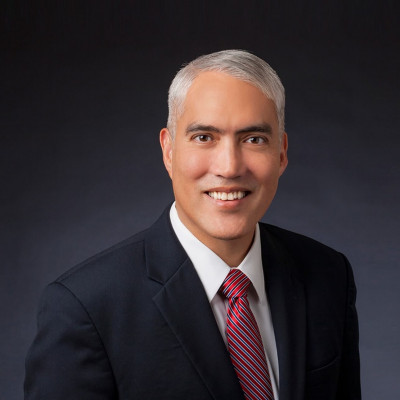
Photo of Mark M. Murakami

Mark Murakami practices in the firm’s Appeals, Business & Commercial Law, Construction Law, Land Use & Eminent Domain, Litigation & Dispute Resolution, Real Estate, and Wills, Trusts & Estates practice groups. His focus is on complex commercial disputes, land use negotiation and litigation, environmental, and general civil litigation. He has appeared in all federal and states courts in Hawaii, most of the administrative boards and commissions, and is licensed in the U.S. Supreme Court, Ninth Circuit Court of Appeals and Court of Federal Claims. He is rated “BV” by Martindale-Hubbell, receiving a rating of 4.4/5.0.

Mark is the 2025 President of the Hawaii State Bar Association (HSBA). Hawaii’s attorneys selected Mark for this leadership role in a statewide election in late 2022. He subsequently served as the 2023 Vice President and 2024 President-Elect. Founded in 1899, the HSBA is a mandatory professional organization for active and inactive licensed attorneys in Hawai. Its mission is to unite and inspire Hawaii’s lawyers to promote justice, serve the public and improve the legal profession. Mark was first elected by his peers to the 21-person HSBA Board in 2012 and was elected Treasurer from 2014 to 2017.

Mark has been appointed to a leadership position in the American Bar Association Section of Litigation. He will serve as Co-Chair for the Real Estate, Condemnation & Trust Litigation Committee and will be responsible for programming and publications for the nationwide membership.

Mark has been elected as the Hawaii member of Owners’ Counsel of America (OCA), an exclusive association of the nation’s leading eminent domain lawyers. Eminent domain is the legal process by which the government acquires private property for public uses, most often by forcing the owner to sell it. Membership in OCA is by invitation-only, and limited to a single member in each state. Members are selected for their experience and dedication in defending the constitutional rights of private property owners in eminent domain, inverse condemnation, regulatory takings, and other property rights matters.

Mark was elected a Fellow of the American College of Real Estate Lawyers (ACREL). Admission to the College is by invitation only to lawyers who are distinguished real estate practitioners and who have contributed to the improvement of real estate law through a combination of speaking, writing, teaching, and serving on relevant boards and commissions. Founded in 1978, the College is comprised of more than 1,000 lawyers distinguished for their skill, experience, and high standards of professional and ethical conduct in the practice of real estate law.

Mark was awarded the CRE (Counselor of Real Estate) credential by The Counselors of Real Estate, an international association of experienced real estate practitioners including appraisers, lawyers, and brokers, who provide expert advisory services to clients on complex real property and land-related matters. Membership in The Counselors of Real Estate is selective and is extended by invitation only, attesting to the practitioner’s expertise and proven competence in his or her chosen area of real estate.

Mark once again was selected by his peers for inclusion in the 2025 Edition of The Best Lawyers in America® for his work in Commercial Litigation, Eminent Domain & Condemnation Law, Land Use & Zoning Law, Litigation-Land Use & Zoning, Real Estate Law, Trusts & Estates, Litigation-Real Estate, and Litigation-Trusts & Estates. He was also named the Best Lawyers® 2013 Lawyer of the Year Eminent Domain & Condemnation Law. Mark has been selected by Super Lawyers for over 10 years.

Mark was the Valedictorian of the Class of 1999 from the University of Hawaii at Manoa, William S. Richardson School of Law where he served as Articles Editor of the University of Hawaii Law Review. He has received numerous academic awards, including: Dean’s Scholar, Porter Scholastic Award (2 times); Awards for highest grade in Property I, Torts I, Contracts I, Corporations, and Professional Responsibility; Kono Award for Academic Achievement; Phi Delta Phi Professional Responsibility Award; HSBA Real Property and Financial Services Section Award.

He is also a graduate of the U.S. Coast Guard Academy in New London, Connecticut. He served for 13 years on active duty before joining the U.S. Coast Guard Reserve in 2005. During his time on active duty, he served on three different Coast Guard cutters, including command of a patrol boat in California. He spent four years assigned to the Fourteenth Coast Guard District Legal Office, prosecuting courts-martial, litigating cases in federal court as a Special Assistant U.S. Attorney, and advising Coast Guard officials on maritime, criminal, environmental and international law issues.

Mark has been awarded the Legion of Merit, the Defense Meritorious Service Medal, two Meritorious Service Medals, the Joint Service Commendation Medal, two Coast Guard Commendation Medals and four Coast Guard Achievement Medals. He retired in July 2022 as a Captain, culminating thirty years of active duty and reserve commissioned service.

To view his blog on federal litigation and maritime law, in and around Hawaii and Oceania, please visit: www.hawaiioceanlaw.com.

Mark was born on Maui and raised in Kailua, Oahu. He is a graduate of Kailua High School and was active in the Castle Performing Arts Center.

A Petition for Writ of Certiorari has been filed with the Supreme Court seeking review of Shipping Corp. of India, Ltd. v. Jaldhi Overseas Pte, Ltd. 

At the risk of grossly simplifying, this case deals with the ability to attach electronic funds transfers as they pass through banks in New York.  The federal rules governing admiralty disputes allow for attachment or prejudgment seizure of “property” to provide for funds to satisfy the claims in dispute.  What is “property” is defined by state law. In international banking, if dollars are denominated as the currency for the transaction, foreign banks use an intermediary bank to convert the current to dollars.  While those funds are present in the Clearing House bank (in New York City), can they be subject to attachment?  Even if the dispute is between two non-American parties?

My earlier post on this case, with briefs and analysis, is here.

The Petition has the following Questions Presented:

1. Whether attachments under Rule B of the Supplemental Rules for Admiralty or Maritime Claims and Asset Forfeiture Actions of the Federal Rules of Civil Procedure of electronic funds transfers (“EFTs”) are precluded by New York State law, specifically §§ 4-A-502(4) & 503 of the New York Uniform Commercial Code?

2. Whether in order to maintain uniform rules relating to maritime matters, which was the fundamental purpose of certain provisions in the Constitution, conflicting provisions of State law and that work material prejudice to the attachment remedy are invalid to that extent?

3. Whether no State, through its enactment of the Uniform Commercial Code, can purport to restrict or define “intangible” property subject to maritime attachment?

The Supreme Court docket can be viewed here.  It denotes that the prevailing party in the Court of Appeals did not file a response. 

There were two amicus briefs filed, one by the Maritime Law Association of the United States and one by the Clearinghouse Association.  Thanks to counsel for providing copies of their pleadings.

MLA filed an Amicus Brief in Support of Petitioner. 

The Clearing House Association filed an Amicus Brief in Opposition.

New admiralty case from the Sixth Circuit Court of Appeals.  This one is about the Oregon rule and the rebuttable presumption arising out of allisions. The case is Bessemer & Lake Erie R.R. Co. v. Seaway Marine Transport, and can be found here.

The trial court found that the Oregon rule established prima facie liability on behalf of the vessel for damage cause in an allision and did required the vessel owner to put on evidence to rebut the presumption before it could put on evidence that the damage was not 100% its fault.  The Court disagreed.  On the Oregon rule, the court stated:

That is not how the Oregon Rule works. It is a burden-shifting doctrine, “not a rule of ultimate liability.” City of Chicago, 375 F.3d at 572. While it may be the case that a moving vessel must rebut the presumption to absolve itself of all liability, id. at 573, we know of no case law to the effect that the vessel must rebut the presumption to relieve itself of some liability—that is, to raise a comparative fault defense against the stationary object. “[T]he Oregon Rule . . . speaks explicitly only to a presumed breach on the part of the alliding vessel, and is not a presumption regarding either the question of causation . . . or the percentages of fault assigned parties adjudged negligent.”

I earlier posted on the Oregon rule in a case from the Second Circuit, here.

Today, the Supreme Court heard oral arguments in the McDonald v. City of Chicago case.  The transcript of that argument is available here.

Case Background

The U.S. Supreme Court is reviewing a case that has the potential to re-write over 100 years of 14th Amendment jurisprudence.  The case is McDonald v. City of Chicago, No. 08-1521 (cert granted Sept. 30, 2009).

The Fourteenth Amendment states: 

All persons born or naturalized in the United States and subject to the jurisdiction thereof, are citizens of the United States and of the State wherein they reside.  No State shall make or enforce any law which shall abridge the privileges or immunities of citizens of the United States; nor shall any State deprive any person of life, liberty or property, without due process of law; nor deny to any person within its jurisdiction the equal protection of the laws.

Question Presented

The Question Presented is:  Whether the Second Amendment right to keep and bear arms is incorporated as against the States by the Fourteenth Amendment's Privileges or Immunities or Due Process Clauses.

My resource page with briefs, opinions below and media is here.  

Next week, the U.S. Supreme Court is scheduled to hear arguments in McDonald v. City of Chicago, a case asking whether the Fourteenth Amendment’s Privileges or Immunities Clause or the Due Process Clause makes the Second Amendment applicable to the states and local governments. It is shaping up to be one of the most important cases of the court’s term and it could usher in a new era in constitutional jurisprudence.

I am moderating a 90 minute teleconference sponsored by the American Bar Association’s State and Local Government Section today (ABA flyer is here).

Quick summary:

Case Background

The U.S. Supreme Court has agreed to hear a case that has the potential to re-write over 100 years of 14th Amendment jurisprudence.  The case is McDonald v. City of Chicago, No. 08-1521 (cert granted Sept. 30, 2009).

The Fourteenth Amendment states: 

All persons born or naturalized in the United States and subject to the jurisdiction thereof, are citizens of the United States and of the State wherein they reside.  No State shall make or enforce any law which shall abridge the privileges or immunities of citizens of the United States; nor shall any State deprive any person of life, liberty or property, without due process of law; nor deny to any person within its jurisdiction the equal protection of the laws.

Question Presented

The Question Presented is:  Whether the Second Amendment right to keep and bear arms is incorporated as against the States by the Fourteenth Amendment’s Privileges or Immunities or Due Process Clauses.

My resource page with briefs, opinions below and media is here.