
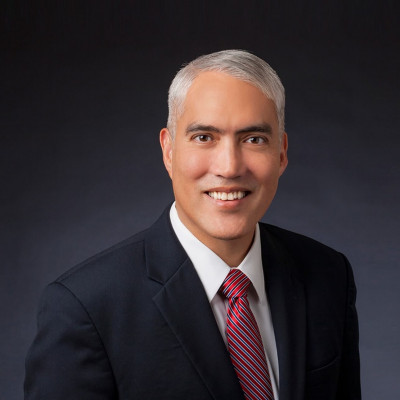
Photo of Mark M. Murakami

Mark Murakami practices in the firm’s Appeals, Business & Commercial Law, Construction Law, Land Use & Eminent Domain, Litigation & Dispute Resolution, Real Estate, and Wills, Trusts & Estates practice groups. His focus is on complex commercial disputes, land use negotiation and litigation, environmental, and general civil litigation. He has appeared in all federal and states courts in Hawaii, most of the administrative boards and commissions, and is licensed in the U.S. Supreme Court, Ninth Circuit Court of Appeals and Court of Federal Claims. He is rated “BV” by Martindale-Hubbell, receiving a rating of 4.4/5.0.

Mark is the 2025 President of the Hawaii State Bar Association (HSBA). Hawaii’s attorneys selected Mark for this leadership role in a statewide election in late 2022. He subsequently served as the 2023 Vice President and 2024 President-Elect. Founded in 1899, the HSBA is a mandatory professional organization for active and inactive licensed attorneys in Hawai. Its mission is to unite and inspire Hawaii’s lawyers to promote justice, serve the public and improve the legal profession. Mark was first elected by his peers to the 21-person HSBA Board in 2012 and was elected Treasurer from 2014 to 2017.

Mark has been appointed to a leadership position in the American Bar Association Section of Litigation. He will serve as Co-Chair for the Real Estate, Condemnation & Trust Litigation Committee and will be responsible for programming and publications for the nationwide membership.

Mark has been elected as the Hawaii member of Owners’ Counsel of America (OCA), an exclusive association of the nation’s leading eminent domain lawyers. Eminent domain is the legal process by which the government acquires private property for public uses, most often by forcing the owner to sell it. Membership in OCA is by invitation-only, and limited to a single member in each state. Members are selected for their experience and dedication in defending the constitutional rights of private property owners in eminent domain, inverse condemnation, regulatory takings, and other property rights matters.

Mark was elected a Fellow of the American College of Real Estate Lawyers (ACREL). Admission to the College is by invitation only to lawyers who are distinguished real estate practitioners and who have contributed to the improvement of real estate law through a combination of speaking, writing, teaching, and serving on relevant boards and commissions. Founded in 1978, the College is comprised of more than 1,000 lawyers distinguished for their skill, experience, and high standards of professional and ethical conduct in the practice of real estate law.

Mark was awarded the CRE (Counselor of Real Estate) credential by The Counselors of Real Estate, an international association of experienced real estate practitioners including appraisers, lawyers, and brokers, who provide expert advisory services to clients on complex real property and land-related matters. Membership in The Counselors of Real Estate is selective and is extended by invitation only, attesting to the practitioner’s expertise and proven competence in his or her chosen area of real estate.

Mark once again was selected by his peers for inclusion in the 2025 Edition of The Best Lawyers in America® for his work in Commercial Litigation, Eminent Domain & Condemnation Law, Land Use & Zoning Law, Litigation-Land Use & Zoning, Real Estate Law, Trusts & Estates, Litigation-Real Estate, and Litigation-Trusts & Estates. He was also named the Best Lawyers® 2013 Lawyer of the Year Eminent Domain & Condemnation Law. Mark has been selected by Super Lawyers for over 10 years.

Mark was the Valedictorian of the Class of 1999 from the University of Hawaii at Manoa, William S. Richardson School of Law where he served as Articles Editor of the University of Hawaii Law Review. He has received numerous academic awards, including: Dean’s Scholar, Porter Scholastic Award (2 times); Awards for highest grade in Property I, Torts I, Contracts I, Corporations, and Professional Responsibility; Kono Award for Academic Achievement; Phi Delta Phi Professional Responsibility Award; HSBA Real Property and Financial Services Section Award.

He is also a graduate of the U.S. Coast Guard Academy in New London, Connecticut. He served for 13 years on active duty before joining the U.S. Coast Guard Reserve in 2005. During his time on active duty, he served on three different Coast Guard cutters, including command of a patrol boat in California. He spent four years assigned to the Fourteenth Coast Guard District Legal Office, prosecuting courts-martial, litigating cases in federal court as a Special Assistant U.S. Attorney, and advising Coast Guard officials on maritime, criminal, environmental and international law issues.

Mark has been awarded the Legion of Merit, the Defense Meritorious Service Medal, two Meritorious Service Medals, the Joint Service Commendation Medal, two Coast Guard Commendation Medals and four Coast Guard Achievement Medals. He retired in July 2022 as a Captain, culminating thirty years of active duty and reserve commissioned service.

To view his blog on federal litigation and maritime law, in and around Hawaii and Oceania, please visit: www.hawaiioceanlaw.com.

Mark was born on Maui and raised in Kailua, Oahu. He is a graduate of Kailua High School and was active in the Castle Performing Arts Center.

The Ocean Policy Task Force will hold a meeting in Honolulu on September 29, 2009.  The Coast Guard flyer has specifics.

Obama Administration officials will hold an Ocean Policy Task Force PublicMeeting in the Pacific Islands on Tuesday, September 29, 2009.

The Interagency Ocean Policy Task Force, led by White House Council on Environmental Quality Chair Nancy Sutley, consists of senior-level officials from Administration agencies, departments, and offices. The Task Force, established by President Obama via presidential memorandum on June 12, is charged with developing a recommendation for a national policy that ensures protection, maintenance, and restoration of oceans, our coasts and the Great Lakes. It will also recommend a framework for improved stewardship, and effective coastal and marine spatial planning. The meeting in the Pacific Islands will be the fourth regional public meeting held since the Task Force was created. The public is encouraged to attend and an opportunity for public comment will be provided.

Members of the public can access the meeting in three ways: by attending in person at one of the sites listed below; by calling into the listen only phone line (888-324-8128/International: 630-395-0060; participant code: 5752428); or via live webstream at http://www.tipg.net/noaa/.

The task force interim policy is available here.

The City and County of Honolulu is considering a bill that would ban shark tour operations, at least the shoreside businesses related to such operations.  The text of the bill provides:

SECTION 1.  Findings and purpose.  The council finds that the oceans are used by city residents and visitors for numerous aquatic activities, including fishing, boating, swimming, surfing, canoe paddling, and snorkeling.  The council further finds that sharks have great cultural, historical, and spiritual significance for many Native Hawaiians.  The council believes that shark tours, the practice of charging residents and visitors to venture into ocean waters to view sharks attracted by fish feeding, raises public safety concerns for ocean users, is disrespectful of Hawaiian culture, alters the natural behavior and distribution of sharks, and may be disruptive of ocean ecology and the natural environment.  The purpose of this ordinance is to ban shark tour operations.

Chapter 40, Revised Ordinances of Honolulu 1990, (“Prohibited Activities in the City”) is amended by adding a new article to be appropriately designated by the revisor of ordinances and to read as follows:

Article ___. Shark Tour Operations Sec. 40-__.1

Definitions

As used in this article:

“Fish feeding” means to introduce or attempt to introduce into the ocean water any food or other substance for consumption by fish.

“Shark tour operations” means the maintenance of an office, the collection of a fee or other financial consideration, the distribution, marketing, or advertising of tickets for sale, or the conduct of any other business activity conducted by a person for the purpose of enabling customers to venture into ocean waters to view sharks attracted by fish feeding; provided that this term does not include educational or cultural expeditions or endeavors for which a fee is not required.

Prohibition. It is unlawful for any person to engage in shark tour operations.

Violation—Penalty. Any person who violates this article shall be fined not more than $1,000 or imprisoned not more than one year or both.”

This ordinance shall take effect upon its approval.

My earlier posts on Maui County’s ban can be found here.

Today, Robert Thomas, Tred Eyerly and I filed an amicus brief on behalf of the Owners’ Counsel of America supporting the Petitioner in the Florida Shoreline Case

Our brief is here.

The Questions Presented to the U.S. Supreme Court is:

The Florida Supreme Court invoked “nonexistent rules of state substantive law” to reverse 100 years of uniform holdings that littoral rights are constitutionally protected. In doing so, did the Florida Court’s decision cause a “judicial taking” proscribed by the Fifth and Fourteenth Amendments to the United States Constitution?

Is the Florida Supreme Court’s approval of a legislative scheme that eliminates constitutional littoral rights and replaces them with statutory rights a violation of the due process clauses of the Fifth and Fourteenth Amendments to the United States Constitution?

Is the Florida Supreme Court’s approval of a legislative scheme that allows an executive agency to unilaterally modify a private landowner’s property boundary without a judicial hearing or the payment of just compensation a violation of the due process clauses of the Fifth and Fourteenth Amendments to the United States Constitution?

Our brief highlights three legal points:

First, the definition of “property,” while largely left up to the states to craft, does include some universal normative principles which are protected by the federal Constitution.  Among these are the right to exclude others and, in this case, the right of littoral landowners to accreted land.

Second, when a state supreme court changes the definition of “property” to the owner’s detriment, a “taking” of property can occur.  Absent the provision of just compensation, the remedy for such action should be the invalidation of the state supreme court’s decision.

Finally, in the areas of shoreline boundaries, custom and public trust, state supreme courts have re-wrote the rules of property without compensating the landowners.  We provided our analysis of the Robinson litigation in Hawaii, the Sotomura litigation in Hawaii, the State ex rel. Thornton v. Hay case (462 P.2d 671 (Or. 1969)) from Oregon, the PASH case from Hawaii and the Matthews v. Bay Head Imp. Ass’n. (471 A.2d 355 (N.J. 1984))case from New Jersey.

One to watch.  Interesting issues of interplay between state laws and the federal Constitution.  This case is especially important in Hawaii where shoreline issues, in terms of ownership and access, are particularly thorny.

The U.S. Coast Guard is about to publish proposed regulations pertaining to ballast water handling in U.S. waters.  The official publication happens tomorrow, but the rule can be downloaded here (it is 180 pages, so be warned before printing).  This action is entitled a Notice of Proposed Rule Making or NPRM.

Highlights:

This NPRM would require that all vessels that operate in U.S. waters, are bound for ports or places in the U.S.,and are equipped with ballast tanks, install and operate a Coast Guard approved ballast water management system (BWMS) before discharging ballast water into U.S. waters. This would include vessels bound for offshore ports or places.

During the phase-in period for the phase-one standard, ballast water exchange (BWE) would remain as a ballast water management (BWM) option for vessels not yet required to meet the BWDS. At the end of the phase-one phase-in schedule, the option of using BWE would be eliminated. From that date forward, all vessels would be required to manage their ballast water through a Coast Guard approved BWMS and meet either the proposed phase-one or phase-two discharge standard, as applicable, or retain their ballast water onboard.

The Coast Guard acknowledges that testing is not yet technologically feasible and that Phase II is 1000 times more stringent than Phase I.  Hence, it is temporally phasing the implementation to allow for testing to become more technologically practical.

There has been much criticism over the Coast Guard’s handling of its authority to deal with invasive species in ballast waters, particularly in the Great Lakes.  See my posts here, herehere.

Comments:

To submit your comment online, go to http://www.regulations.gov and click on the “submit a comment” box, which will then become highlighted in blue. Insert “USCG-2001-10486” in the Keyword box, click”Search”, and then click on the balloon shape in the Actions column.