
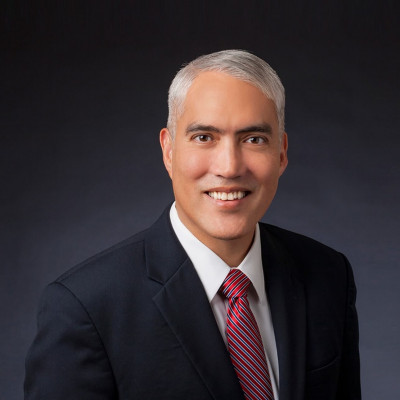
Photo of Mark M. Murakami

Mark Murakami practices in the firm’s Appeals, Business & Commercial Law, Construction Law, Land Use & Eminent Domain, Litigation & Dispute Resolution, Real Estate, and Wills, Trusts & Estates practice groups. His focus is on complex commercial disputes, land use negotiation and litigation, environmental, and general civil litigation. He has appeared in all federal and states courts in Hawaii, most of the administrative boards and commissions, and is licensed in the U.S. Supreme Court, Ninth Circuit Court of Appeals and Court of Federal Claims. He is rated “BV” by Martindale-Hubbell, receiving a rating of 4.4/5.0.

Mark is the 2025 President of the Hawaii State Bar Association (HSBA). Hawaii’s attorneys selected Mark for this leadership role in a statewide election in late 2022. He subsequently served as the 2023 Vice President and 2024 President-Elect. Founded in 1899, the HSBA is a mandatory professional organization for active and inactive licensed attorneys in Hawai. Its mission is to unite and inspire Hawaii’s lawyers to promote justice, serve the public and improve the legal profession. Mark was first elected by his peers to the 21-person HSBA Board in 2012 and was elected Treasurer from 2014 to 2017.

Mark has been appointed to a leadership position in the American Bar Association Section of Litigation. He will serve as Co-Chair for the Real Estate, Condemnation & Trust Litigation Committee and will be responsible for programming and publications for the nationwide membership.

Mark has been elected as the Hawaii member of Owners’ Counsel of America (OCA), an exclusive association of the nation’s leading eminent domain lawyers. Eminent domain is the legal process by which the government acquires private property for public uses, most often by forcing the owner to sell it. Membership in OCA is by invitation-only, and limited to a single member in each state. Members are selected for their experience and dedication in defending the constitutional rights of private property owners in eminent domain, inverse condemnation, regulatory takings, and other property rights matters.

Mark was elected a Fellow of the American College of Real Estate Lawyers (ACREL). Admission to the College is by invitation only to lawyers who are distinguished real estate practitioners and who have contributed to the improvement of real estate law through a combination of speaking, writing, teaching, and serving on relevant boards and commissions. Founded in 1978, the College is comprised of more than 1,000 lawyers distinguished for their skill, experience, and high standards of professional and ethical conduct in the practice of real estate law.

Mark was awarded the CRE (Counselor of Real Estate) credential by The Counselors of Real Estate, an international association of experienced real estate practitioners including appraisers, lawyers, and brokers, who provide expert advisory services to clients on complex real property and land-related matters. Membership in The Counselors of Real Estate is selective and is extended by invitation only, attesting to the practitioner’s expertise and proven competence in his or her chosen area of real estate.

Mark once again was selected by his peers for inclusion in the 2025 Edition of The Best Lawyers in America® for his work in Commercial Litigation, Eminent Domain & Condemnation Law, Land Use & Zoning Law, Litigation-Land Use & Zoning, Real Estate Law, Trusts & Estates, Litigation-Real Estate, and Litigation-Trusts & Estates. He was also named the Best Lawyers® 2013 Lawyer of the Year Eminent Domain & Condemnation Law. Mark has been selected by Super Lawyers for over 10 years.

Mark was the Valedictorian of the Class of 1999 from the University of Hawaii at Manoa, William S. Richardson School of Law where he served as Articles Editor of the University of Hawaii Law Review. He has received numerous academic awards, including: Dean’s Scholar, Porter Scholastic Award (2 times); Awards for highest grade in Property I, Torts I, Contracts I, Corporations, and Professional Responsibility; Kono Award for Academic Achievement; Phi Delta Phi Professional Responsibility Award; HSBA Real Property and Financial Services Section Award.

He is also a graduate of the U.S. Coast Guard Academy in New London, Connecticut. He served for 13 years on active duty before joining the U.S. Coast Guard Reserve in 2005. During his time on active duty, he served on three different Coast Guard cutters, including command of a patrol boat in California. He spent four years assigned to the Fourteenth Coast Guard District Legal Office, prosecuting courts-martial, litigating cases in federal court as a Special Assistant U.S. Attorney, and advising Coast Guard officials on maritime, criminal, environmental and international law issues.

Mark has been awarded the Legion of Merit, the Defense Meritorious Service Medal, two Meritorious Service Medals, the Joint Service Commendation Medal, two Coast Guard Commendation Medals and four Coast Guard Achievement Medals. He retired in July 2022 as a Captain, culminating thirty years of active duty and reserve commissioned service.

To view his blog on federal litigation and maritime law, in and around Hawaii and Oceania, please visit: www.hawaiioceanlaw.com.

Mark was born on Maui and raised in Kailua, Oahu. He is a graduate of Kailua High School and was active in the Castle Performing Arts Center.

The State of Hawaii turns 50 this week.  Owing to looming budget shortfalls in the State's budget, celebrations seem scarce around town.  This fact is not lost on the Editors of the New York Times who published an editorial today discussing the relative lack of celebration planned for this anniversary.

On that note, it seemed relevant to consider some differences between states and territories (I use that term generically to capture commonwealths, possessions and other land areas affiliated with the United States).

Statehood matters.  Some differences are highlighted below:

Individual rights: Around 1900, the U.S. Supreme Court heard a series of cases involving the newly acquired lands of Puerto Rico, Philippines, Hawaii and Alaska.  The cases, dubbed the Insular Cases, grappled with the notion that being a state was different than any other status.  As recently as 1990, the U.S. Supreme Court has said that the full panoply of constitutional rights are not automatic in non-states.  In United States v. Verdugo-Urquidez, the Supreme Court stated:

The global view taken by the Court of Appeals of the application of the Constitution is also contrary to this Court's decisions in the Insular Cases, which held that not every constitutional provision applies to governmental activity even where the United States has sovereign power. See, e. g., Balzac v. Porto Rico, 258 U.S. 298 (1922) (Sixth Amendment right to jury trial inapplicable in Puerto Rico); Ocampo v. United States, 234 U.S. 91 (1914) (Fifth Amendment grand jury provision inapplicable in Philippines); Dorr v. United States, 195 U.S. 138 (1904) (jury trial provision inapplicable in Philippines); Hawaii v. Mankichi, 190 U.S. 197 (1903) (provisions on indictment by grand jury and jury trial inapplicable in Hawaii); Downes v. Bidwell, 182 U.S. 244 (1901) (Revenue Clauses of Constitution inapplicable to Puerto Rico). In Dorr, we declared the general rule that in an unincorporated territory – one not clearly destined for statehood – Congress was not required to adopt "a system of laws which shall include the right of trial by jury, and that the Constitution does not, without legislation and of its own force, carry such right to territory so situated." 195 U.S., at 149 (emphasis added). Only "fundamental" constitutional rights are guaranteed to inhabitants of those territories. Id., at 148; Balzac, supra, at 312-313; see Examining Board of Engineers, Architects and Surveyors v. Flores de Otero, 426 U.S. 572, 599 , n. 30 (1976). If that is true with respect to territories ultimately governed by Congress, respondent's claim that the protections of the Fourth Amendment extend to aliens in foreign nations is even weaker. And certainly, it is not open to us in light of the Insular Cases to endorse the [494 U.S. 259, 269]   view that every constitutional provision applies wherever the United States Government exercises its power.

Plainly, the Supreme Court considers territories to being either on the path to statehood or the path to independence.  Citizens of states have more rights than citizens of non-states.

Elections:  Per Art. II, Section 1 of the U.S. Constitution, states, and not citizens, elect the President. "Each State shall appoint, in such Manner as the Legislature thereof may direct, a Number of Electors, equal to the whole Number of Senators and Representatives to which the State may be entitled in the Congress: but no Senator or Representative, or Person holding an Office of Trust or Profit under the United States, shall be appointed an Elector."

Representation in Congress:  Per Art. I, Section 2 of the U.S. Constitution, only states can be represented in the U.S. Congress.  "The House of Representatives shall be composed of Members chosen every second Year by the People of the several States, and the Electors in each State shall have the Qualifications requisite for Electors of the most numerous Branch of the State Legislature."  Art. I, Section 3 has a parallel provision for the U.S. Senate.  Non-states may have Delegates who lack voting power.

This is not a law review article on what laws apply to what territories.  Each federal law could have its own definition of "state" which could include non-states.  The Submerged Lands Act defines states as "states of the union" and it provides them title to the submerged lands adjacent to their territorial landmass.  See 43 U.S.C. s. 2301. 

Happy 50th Hawaii.

Hawaii's Intermediate Court of Appeals just issued a memorandum decision (not published in a bound reporter) regarding Hawaii's Information Practices Law and the availability of attorney's fees to litigants.  The underlying case involved runoff into the ocean, but those issues weren't germane to the decision.

In State of Hawaii v. Earthjustice, pursuant to a

The County of Maui is considering a bill purporting to ban shark tours.  KITV reported the story here.

I pulled the bill from Maui County's website. 

The text is short, so I have reproduced below:

SECTION 1. Findings and purpose. The Council finds that sharks have been revered throughout Hawaiian history; sharks, called mano