
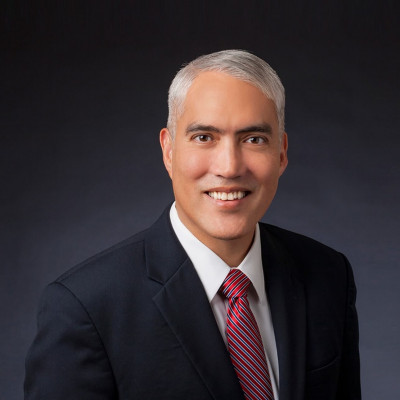
Photo of Mark M. Murakami

Mark Murakami practices in the firm’s Appeals, Business & Commercial Law, Construction Law, Land Use & Eminent Domain, Litigation & Dispute Resolution, Real Estate, and Wills, Trusts & Estates practice groups. His focus is on complex commercial disputes, land use negotiation and litigation, environmental, and general civil litigation. He has appeared in all federal and states courts in Hawaii, most of the administrative boards and commissions, and is licensed in the U.S. Supreme Court, Ninth Circuit Court of Appeals and Court of Federal Claims. He is rated “BV” by Martindale-Hubbell, receiving a rating of 4.4/5.0.

Mark is the 2025 President of the Hawaii State Bar Association (HSBA). Hawaii’s attorneys selected Mark for this leadership role in a statewide election in late 2022. He subsequently served as the 2023 Vice President and 2024 President-Elect. Founded in 1899, the HSBA is a mandatory professional organization for active and inactive licensed attorneys in Hawai. Its mission is to unite and inspire Hawaii’s lawyers to promote justice, serve the public and improve the legal profession. Mark was first elected by his peers to the 21-person HSBA Board in 2012 and was elected Treasurer from 2014 to 2017.

Mark has been appointed to a leadership position in the American Bar Association Section of Litigation. He will serve as Co-Chair for the Real Estate, Condemnation & Trust Litigation Committee and will be responsible for programming and publications for the nationwide membership.

Mark has been elected as the Hawaii member of Owners’ Counsel of America (OCA), an exclusive association of the nation’s leading eminent domain lawyers. Eminent domain is the legal process by which the government acquires private property for public uses, most often by forcing the owner to sell it. Membership in OCA is by invitation-only, and limited to a single member in each state. Members are selected for their experience and dedication in defending the constitutional rights of private property owners in eminent domain, inverse condemnation, regulatory takings, and other property rights matters.

Mark was elected a Fellow of the American College of Real Estate Lawyers (ACREL). Admission to the College is by invitation only to lawyers who are distinguished real estate practitioners and who have contributed to the improvement of real estate law through a combination of speaking, writing, teaching, and serving on relevant boards and commissions. Founded in 1978, the College is comprised of more than 1,000 lawyers distinguished for their skill, experience, and high standards of professional and ethical conduct in the practice of real estate law.

Mark was awarded the CRE (Counselor of Real Estate) credential by The Counselors of Real Estate, an international association of experienced real estate practitioners including appraisers, lawyers, and brokers, who provide expert advisory services to clients on complex real property and land-related matters. Membership in The Counselors of Real Estate is selective and is extended by invitation only, attesting to the practitioner’s expertise and proven competence in his or her chosen area of real estate.

Mark once again was selected by his peers for inclusion in the 2025 Edition of The Best Lawyers in America® for his work in Commercial Litigation, Eminent Domain & Condemnation Law, Land Use & Zoning Law, Litigation-Land Use & Zoning, Real Estate Law, Trusts & Estates, Litigation-Real Estate, and Litigation-Trusts & Estates. He was also named the Best Lawyers® 2013 Lawyer of the Year Eminent Domain & Condemnation Law. Mark has been selected by Super Lawyers for over 10 years.

Mark was the Valedictorian of the Class of 1999 from the University of Hawaii at Manoa, William S. Richardson School of Law where he served as Articles Editor of the University of Hawaii Law Review. He has received numerous academic awards, including: Dean’s Scholar, Porter Scholastic Award (2 times); Awards for highest grade in Property I, Torts I, Contracts I, Corporations, and Professional Responsibility; Kono Award for Academic Achievement; Phi Delta Phi Professional Responsibility Award; HSBA Real Property and Financial Services Section Award.

He is also a graduate of the U.S. Coast Guard Academy in New London, Connecticut. He served for 13 years on active duty before joining the U.S. Coast Guard Reserve in 2005. During his time on active duty, he served on three different Coast Guard cutters, including command of a patrol boat in California. He spent four years assigned to the Fourteenth Coast Guard District Legal Office, prosecuting courts-martial, litigating cases in federal court as a Special Assistant U.S. Attorney, and advising Coast Guard officials on maritime, criminal, environmental and international law issues.

Mark has been awarded the Legion of Merit, the Defense Meritorious Service Medal, two Meritorious Service Medals, the Joint Service Commendation Medal, two Coast Guard Commendation Medals and four Coast Guard Achievement Medals. He retired in July 2022 as a Captain, culminating thirty years of active duty and reserve commissioned service.

To view his blog on federal litigation and maritime law, in and around Hawaii and Oceania, please visit: www.hawaiioceanlaw.com.

Mark was born on Maui and raised in Kailua, Oahu. He is a graduate of Kailua High School and was active in the Castle Performing Arts Center.

The Hawaii State Bar Association’s Admiralty Section was pleased to host two speakers from the State of Hawaii’s Department of Land and Natural Resources, Kamaile Nichols and Bin Li. 

They discussed civil penalties or assessments for natural resource damages for injury to coral reefs.  The pertinent legal authorities are set forth in a handout here

The criminal complaint outlining the charges against Somali pirate, Abduwali Abdukhadir Muse is available here.  Based on the charges, he faces life imprisonment.

The four charges he faces are:

1.  Piracy, 18 U.S.C. 1651, related to the seizure and robbery of the Maersk Alabama.

2.  Violence against maritime navigation, 18 U.S.C. 2280(e), which criminalizes acts which, among other things, destroys or seriously damages maritime navigational facilities or seriously interferes with their operation, if such act is likely to endanger the safe navigation of a ship.

3. Use and carriage of a firearm in the commission of a crime of violence (specifically, violence against maritime navigation), 18 U.S.C. 924.  This carries a mandatory minimum sentence of 10 years if the firearm is discharged.

4. Hostage taking, 18 U.S.C. 1203.

5.  Use of a firearm during the hostage taking in violation of 18 U.S.C. 924.

Because piratical acts in U.S. waters are unheard of, this case will be the first piracy prosecution in a long time.  I would be cautious about saying that it is the first piracy case in 100 years because the crime could have been charged as murder or robbery or the crime may have not been reported on or decided in a published opinion. 

The exercise of criminal jurisdiction over extraterritorial crimes is not unprecedented.  As the complaint notes, the United States successfully asserted jurisdiction over Ramzi Yousef, Osama Bin Laden (tried in absentia) and Shi Lei.  The Ninth Circuit decision in Shi Lei is the only reported case interpreting the Violence Against Maritime Navigation statute.  [Disclosure: while serving as a Coast Guard JAG, I was a Special Assistant U.S. Attorney and worked on the Shi Lei case]. 

Per the Ninth Circuit in Shi Lei:

Article I, Section 8, Clause 10 of the United States Constitution (the “Offense Clause”) empowers Congress to “define and punish Piracies and Felonies committed on the high Seas, and Offenses against the Law of Nations.” Because the high seas, by definition, lie outside United States territory, see United States v. Davis, 905 F.2d 245, 248 (9th Cir. 1990), the Offense Clause grants Congress the authority to apply federal law beyond the borders of the United States, see EEOC v. Arabian Am. Oil Co., 499 U.S. 244, 248 (1991).

Section 2280 is an exercise of Congress’s constitutional authority to define and punish “Felonies on the high Seas” because it proscribes felony offenses and expressly applies to international waters. See 18 U.S.C. § 2280(e). In addition, § 2280(a)(1)(A) and (B), the provisions under which Shi was charged, proscribe offenses which meet the definition of piracy. “Piracy” traditionally has been defined as “robbery, or forcible depredations upon the sea.” United States v. Smith, 18 U.S. 153, 161 (1820). “Depredation” is “the act of plundering, robbing, or pillaging.” Black’s Law Dictionary 397 (5th ed. 1979).

All three acts require the use of force.3 Section 2280(a)(1)(A) prohibits “seiz[ing] or exercis[ing] control over a ship by force or threat thereof,” and § 2280(a)(1)(B) prohibits “act[s] of violence against a person on board a ship” that are “likely to endanger the safe navigation of that ship.” Because such offenses involve interference with property on the open sea through the use of force, they are within Congress’s power to define and to punish crimes of piracy. See Smith, 18 U.S. at 158-59 (treating “Piracies,” “Felonies on the high Seas,” and “Offenses against the Laws of Nations” as three separate offenses).

My earlier posts on Somali piracy are: here, here, here, here, here, here.  This list is getting long, I’ll put together a resource page later.

I was fortunate to attend a lecture by Professor Andrew Jameson at Honolulu's Pacific Club on April 22.

Professor Jameson is a renowned expert on Near Asia. With a Harvard PhD, he was a longtime professor at the University of California-Berkeley and has consulted throughout the world.

He traced the history of piracy from its

More resources on the Maersk Alabama piratical attack and hostage-taking incident. 

  • Admiral Thad Allen, Commandant of the U.S. Coast Guard was interviewed on ABC's This Week (transcript here).  At issue is his call for an international framework to address Somali piracy.  This appears to call for a need to address the "endgame" or what-do-we-do-with-the pirates we

The State of Hawaii has provided notice to the U.S. Navy that it will be seeking natural resource damages for coral reefs harmed by the grounding of the USS Port Royal, news here.

The State’s letter can be downloaded here.  The letter is not a claim letter per se but rather implores the Navy to begin restoration and mitigation work on the corals damaged by the Port Royal grounding:

The State intends to seek both mitigation and restoration assistance from the U.S. Navy and damages for loss of natural resources.  At this time the State is only requesting assistance from the U.S. Navy for the purpose of minimizing the amount of primary damage resulting from the grounding incident and to prevent potentially devastating secondary damage that could be aggravated by the upcoming summer swells.

One to watch for sure.  The State has increased its use of natural resource damage assessments for damage to coral reefs and it will be interesting to see the State’s use of such assessments against the federal government.

In my role as co-chair of the Hawaii State Bar Association's Admiralty Section, we are putting on a lunchtime discussion on natural resource damage assessments by the State of Hawaii.  The title of the presentation is "Molokini Shoal Enforcement Action for Coarl Damage within the Marine Life Conservation District."  Two representatives of the State's Department

Yesterday, the Supreme Court heard oral arguments in the Polar Tankers v. City of Valdez case.  The transcript is here.

In my earlier post, I suggested that the Court took the case not on the duty of tonnage issue but rather on discriminatory interstate tax schemes (think internet sales tax).  The amici briefs were virtually all in this camp.

Oral arguments, however, were ALL about the tonnage clause of the Constitution.  It suggests to me that the Court was NOT ready to wade into the interstate tax issue and the tonnage issue was a very, very clean way to strike down the tax, without creating precedent that would apply to the several states’ ability to tax internet sales, etc. 

One great moment in the transcript which confronts, perhaps, a shortcoming of the Original Intent doctrine.  In short (and admittedly superficial) fashion, this doctrine or judicial philosophy calls for the interpretation of the Constitution, at the time it was drafted.  So, to define terms like “cruel and unusual” or “arms,” Originalists will turn to the 1700’s for clues as to meaning. 

So, does the tonnage clause include air or rail, invented long after the drafting of the Constitution?

CHIEF JUSTICE ROBERTS:  Well, but just on a — maybe this doesn’t matter. I have seen the capacity of cargo planes described in terms of tonnage. Does this clause apply to those?

MR. ROTHFELD: That — that is an interesting question. It — it was written to apply to ships simply because in the late 18th century, the only way of moving substantial amounts of cargo was by — was by vessel. And I imagine that if the Framers had in mind airplanes and railroads –

CHIEF JUSTICE ROBERTS: It is that we have an evolving Constitution, after all.

MR. ROTHFELD: I will leave that one alone, Your Honor.

(Laughter.)

CHIEF JUSTICE ROBERTS: Well, then, do you know — it’s not an entirely frivolous point. I mean, do you know if States, localities where airports are located charge things that might be viewed as Tonnage Clauses on airplanes?

MR. ROTHFELD: I don’t know a definitive answer to that. ..

Side note: As posted here, Hawaii’s invasive species assessement fee does impose a tax on cargo, both on vessels and airplanes.  A per ton fee is tough to calculate on a parcel carried on an airplane for sure.

Background Materials on the case:

My posts: herehere.

The question presented is:

1. Whether a municipal personal property tax that falls exclusively on large vessels using the municipality’s harbor violates the Tonnage Clause of the Constitution, art. I, § 10, cl. 3.

2. Whether a municipal personal property tax that is apportioned to reach the value of property with an out-of-State domicile for periods when the property is on the high seas or otherwise outside the taxing jurisdiction of any State violates the Commerce and Due Process Clauses of the Constitution.

Polar Tankers Opening Brief is here.

City of Valdez Answering Brief is here.

Amici:  Broadband Tax Institute (brief here)(supporting the out-of-state tax argument); the Council on State Taxation (brief here)(out-of-state tax argument); Tropical Shipping and Construction Company, Ltd. (brief here)(tonnage argument); World Shipping Council and Cruise Lines International Assn. (brief here)(tonnage argument); the National Federation of Independent Business Small Business Legal Center (brief here)(out-of-state tax argument); Seventeen State Governments (brief here)(supporting Valdez); and the Multistate Tax Commission (brief here)(supporting Valdez). 

Polar Tankers Reply Brief here.


Last September, a Coast Guard helicopter crashed during a training mission near the Honolulu airport.  Tragically, four Coast Guardsmen were killed.  They were:  Captain Thomas Nelson (he was posthumously promoted), Lt. Commander Andrew Wischmeier, Aviation Survival Technician First Class David Skimin and Aviation Maintenance Technician 2nd Class Joshua Nichols.  Captain Nelson was four years ahead of