Ah, the Jones Act.In the wake of Hurricane Sandy, the President waived the Jones Act provisions barring foreign built tankers from carrying cargo between U.S. ports.Is it a "statutory relic" which is outdated and counter-productive? Does it cause consumer prices to increase, unfairly hitting remote communities like Alaska, Hawaii and Puerto Rico? Should it

Please excuse my absence from this blog.  I've been on active duty with the Coast Guard Reserve in Washington and between snow, sleet, and a full email inbox, I've been busy.

Someone forwarded me this video and, although I don't speak Italian, I do understand the international language of military "get-your-butt-in-gear" – speak.


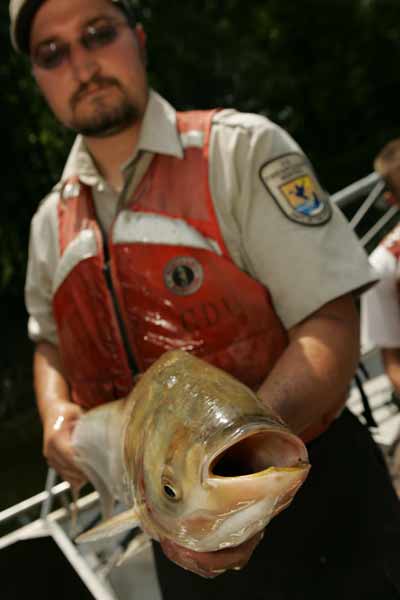
The Asian Carp.  It is an ugly fella.  Should the federal government be required to install block nets to stop these beasties from invading the Great lakes?  We’ll see if the Supreme Court thinks that is a question it should be asking.

AsianCarpFWS
Photo courtesy of the National Park Service.

The Asian Carp is an invasive

New maritime insurance case from the Seventh Circuit Court of Appeals.  The case involves a pollution insurance policy and coverage for an oil spill following a vessel explosion in Chicago.  The case is Egan Marine Corp. v. Great American Insur. Co., 2011 U.S. App. LEXIS 23369 and the original opinion can be found here.

The

The ten-year anniversary of 9/11 prompted a vivid documentary about the boatlift of hundreds of thousands of New Yorkers off Manhattan following the World Trade Center attacks. 


Alternative, less choppy video, here.

On the Coast Guard’s efforts, and the herculean response of the maritime community in New York, the Commandant of the U.S. Coast

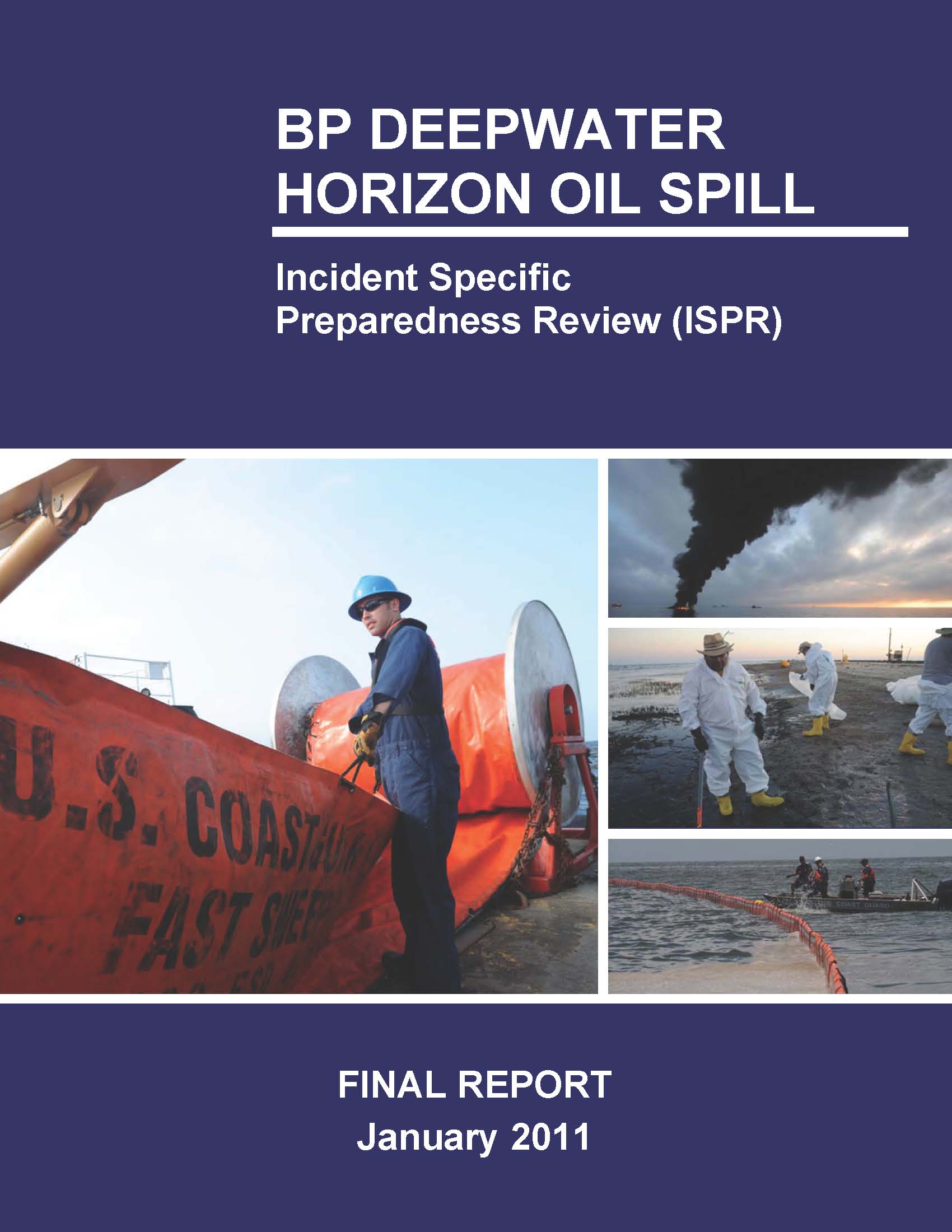
The U.S. Coast Guard has released its “Incident Specific Preparedness Review” for the Deepwater Horizon oil spill of 2010.  Fox is reporting that this report suggests the Administration slowed some of the flow of information from the responders.

BPDWH 4 

The Commandant of the Coast Guard’s approval memorandum states:

On February I, 20II, I received the

Today, the American Bar Association endorsed the Effective National Mitigation Effort, a white paper on national mitigation prepared by the Association of the Directors of Emergency Management of the U.S. States and Territories and the District of Columbia.

The White Paper is a concise statement outlining concerns, opportunities and strategies to mitigate damages from “hazards”

Freedom of Information Act cases reach the Supreme Court about once every 15 years.  Milner v. Dep't of Navy is an interesting case that pits the Navy's desire for security of its bases against the public's statutory right to disclosure of government documents, bundled up with the post-9/11 desire to ensure local responders (without federal security clearances) have the information they need to respond to natural and man-made disasters. 

Oral argument was earlier this week.  The transcript is here.  My earlier posts on this case can be found here.

The FOIA exemption at issues is remarkably innocuous:

5 U.S.C. § 552(b) of the Freedom of Information Act ("Exemption 2") provides in pertinent part:

(b) This section [providing for public access to government documents] does not apply to matters that are:

(2) related solely to the internal personnel rules and practices of an agency.