
Hot off the Press: the Fourth Circuit Court of Appeals just issued a decision arising out of a "Magic Pipe" case and the shipowner's attempt to post a bond allowing the offending vessel to sail. The case is Angelex, Ltd. v. United States of America and the opinion can be found here. The United States
Liability for Oil Spills, Warranties for Safe Berth – Third Circuit Decision in Athos I
The Court of Appeals published a decision in the Athos I oil spill. It is a consolidated case arising from a limitation action and an action to apportion liability for oil spill clean up costs, to the tune of $180 million.The opinion is lengthy and I'm still digesting it. But, it can be found
Eleventh Circuit Holds Marine Surveyor Guilty for MARPOL Violations
In a question of first impression, the Eleventh Circuit affirmed the conviction of a marine surveyor for knowingly violating the MARPOL treaty while aboard a foreign vessel in a U.S. port. The case is United States v. Pena and can be read here.
By way of legal background, MARPOL is the name of the
Emission Control Area and Ship Fuel in the News
The Environmental Protection Agency’s new requirement for sulfur content in maritime fuels is coming into force on August 1.
Hawaii News Now report with video here.
Per the EPA, the “Emission Control Area” for North America will go into effect on August 1, 2012:
On March 26, 2010, the International Maritime Organization (IMO) amended
New Maritime Insurance Case from Seventh Circuit – Egan Marine Corp. v. Great American Insur. Co.
New maritime insurance case from the Seventh Circuit Court of Appeals. The case involves a pollution insurance policy and coverage for an oil spill following a vessel explosion in Chicago. The case is Egan Marine Corp. v. Great American Insur. Co., 2011 U.S. App. LEXIS 23369 and the original opinion can be found here.
The
Pacific Ocean Environmental Issues in the News – Rare Earth and Plastics
Lots of ocean environmental issues in the news today.
The Star Advertiser reports that Japanese researchers discovered rare earth minerals in the Pacific Ocean, apparently beyond the U.S. Exclusive Economic Zone. Several interviewed, including my former colleague Robert Harris, have expressed some concerns about the environmental impacts of such action. This is an interesting discovery
Coast Guard Releases Deepwater Horizon Preparedness Review Report
The U.S. Coast Guard has released its “Incident Specific Preparedness Review” for the Deepwater Horizon oil spill of 2010. Fox is reporting that this report suggests the Administration slowed some of the flow of information from the responders.
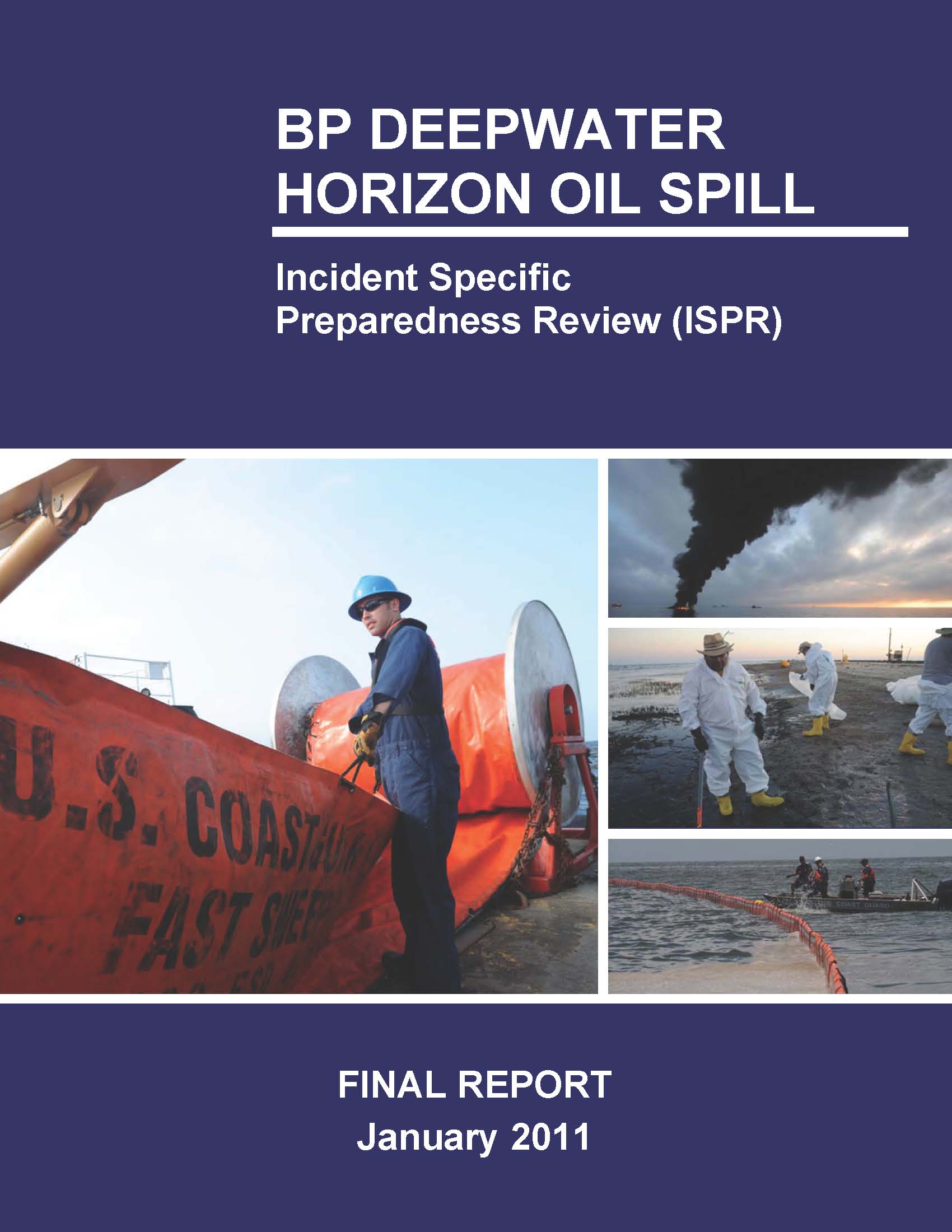
The Commandant of the Coast Guard’s approval memorandum states:
On February I, 20II, I received the
EPA Sues Diesel Engine Manufacturer for Clean Air Act Violations: U.S. v. Coltec Industries Inc.
Found an interesting case recently relating to Fairbanks Morse diesel engines on several Navy ships. The United States, particularly the Environmental Protection Agency, brought suit against Coltec Industries for violations of the Clean Air Act. The complaint can be downloaded here – US v. Coltec Industries, et al .
The government alleges that pursuant to the Clean
NTSB Releases Cosco Busan Report – Coast Guard VTS Criticized
The National Transportation Safety Board has released its report on the Cosco Busan incident (quick and dirty summary in the San Francisco Chronicle’s article here).

From the Executive Summary:
The National Transportation Safety Board determines that the probable cause of the
allision of the Cosco Busan with the San Francisco–Oakland Bay Bridge was the failure to safely
navigate the vessel in restricted visibility as a result of (1) the pilot’s degraded cognitive
performance from his use of impairing prescription medications, (2) the absence of a
comprehensive pre-departure master/pilot exchange and a lack of effective communication
between the pilot and the master during the accident voyage, and (3) the master’s ineffective
oversight of the pilot’s performance and the vessel’s progress. Contributing to the accident was the failure of Fleet Management Ltd. to adequately train the Cosco Busan crewmembers before their initial voyage on the vessel, which included a failure to ensure that the crew understood and complied with the company’s safety management system. Also contributing to the accident was the U.S. Coast Guard’s failure to provide adequate medical oversight of the pilot in view of the medical and medication information that the pilot had reported to the Coast Guard.The following safety issues were identified during this accident investigation:
• Medical oversight of the Cosco Busan pilot;
• Medical oversight of mariners in general;
• Guidance for vessel traffic service operators in exercising authority to manage traffic;
• Procedures for improving the assessment of oil spills in California waters; and
• Training and oversight of the Cosco Busan crew.Board member Deborah A.P. Hersman issued her own statement in dissent, identifying her criticism of the Coast Guard’s Vessel Traffic Service (VTS):
The taxpayers support 35 employees at VTS San Francisco to provide this protection and enforce discipline in an industry of safe professionals who may be imprudently influenced by economic pressures and who may occasionally make mistakes. VTS San Francisco’s stated purpose is to facilitate the safe and efficient transit of vessel traffic in an effort to prevent collisions, rammings, groundings, and the associated loss of life and damage to property and the environment. By not naming VTS as a contributing factor in the probable cause, the Board turned a blind eye to the public’s strongest safety advocate in the San Francisco Bay.
International Agreement Reached on Shipboard Emissions
According to the EPA,
On October 9, 2008, the Member States of the International Maritime Organization adopted new international standards for marine diesel engines and their fuels. This new program will dramatically reduce air pollution from ships by establishing a new tier of performance-based standards for marine diesel engines and their fuels and by establishing additional, more stringent emission requirements for ships that operate in specially-designated coastal areas where air-quality problems are acute.
EPA announcement and resources here.
Per International Custom House Blog Here:
“Implementation of these IMO standards will be a very important part of a coordinated national strategy to reduce emissions from ocean-going vessels,” said Rear Adm. Sally Brice-O’Hara, the Coast Guard’s deputy commandant for operations. “I was fortunate to personally be at IMO when these important amendments were adopted. I also had the distinct pleasure to deposit the instrument of ratification for MARPOL Annex VI, on behalf of the United States.”