
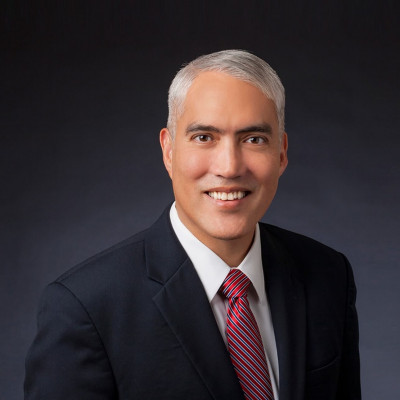
Photo of Mark M. Murakami

Mark Murakami practices in the firm’s Appeals, Business & Commercial Law, Construction Law, Land Use & Eminent Domain, Litigation & Dispute Resolution, Real Estate, and Wills, Trusts & Estates practice groups. His focus is on complex commercial disputes, land use negotiation and litigation, environmental, and general civil litigation. He has appeared in all federal and states courts in Hawaii, most of the administrative boards and commissions, and is licensed in the U.S. Supreme Court, Ninth Circuit Court of Appeals and Court of Federal Claims. He is rated “BV” by Martindale-Hubbell, receiving a rating of 4.4/5.0.

Mark is the 2025 President of the Hawaii State Bar Association (HSBA). Hawaii’s attorneys selected Mark for this leadership role in a statewide election in late 2022. He subsequently served as the 2023 Vice President and 2024 President-Elect. Founded in 1899, the HSBA is a mandatory professional organization for active and inactive licensed attorneys in Hawai. Its mission is to unite and inspire Hawaii’s lawyers to promote justice, serve the public and improve the legal profession. Mark was first elected by his peers to the 21-person HSBA Board in 2012 and was elected Treasurer from 2014 to 2017.

Mark has been appointed to a leadership position in the American Bar Association Section of Litigation. He will serve as Co-Chair for the Real Estate, Condemnation & Trust Litigation Committee and will be responsible for programming and publications for the nationwide membership.

Mark has been elected as the Hawaii member of Owners’ Counsel of America (OCA), an exclusive association of the nation’s leading eminent domain lawyers. Eminent domain is the legal process by which the government acquires private property for public uses, most often by forcing the owner to sell it. Membership in OCA is by invitation-only, and limited to a single member in each state. Members are selected for their experience and dedication in defending the constitutional rights of private property owners in eminent domain, inverse condemnation, regulatory takings, and other property rights matters.

Mark was elected a Fellow of the American College of Real Estate Lawyers (ACREL). Admission to the College is by invitation only to lawyers who are distinguished real estate practitioners and who have contributed to the improvement of real estate law through a combination of speaking, writing, teaching, and serving on relevant boards and commissions. Founded in 1978, the College is comprised of more than 1,000 lawyers distinguished for their skill, experience, and high standards of professional and ethical conduct in the practice of real estate law.

Mark was awarded the CRE (Counselor of Real Estate) credential by The Counselors of Real Estate, an international association of experienced real estate practitioners including appraisers, lawyers, and brokers, who provide expert advisory services to clients on complex real property and land-related matters. Membership in The Counselors of Real Estate is selective and is extended by invitation only, attesting to the practitioner’s expertise and proven competence in his or her chosen area of real estate.

Mark once again was selected by his peers for inclusion in the 2025 Edition of The Best Lawyers in America® for his work in Commercial Litigation, Eminent Domain & Condemnation Law, Land Use & Zoning Law, Litigation-Land Use & Zoning, Real Estate Law, Trusts & Estates, Litigation-Real Estate, and Litigation-Trusts & Estates. He was also named the Best Lawyers® 2013 Lawyer of the Year Eminent Domain & Condemnation Law. Mark has been selected by Super Lawyers for over 10 years.

Mark was the Valedictorian of the Class of 1999 from the University of Hawaii at Manoa, William S. Richardson School of Law where he served as Articles Editor of the University of Hawaii Law Review. He has received numerous academic awards, including: Dean’s Scholar, Porter Scholastic Award (2 times); Awards for highest grade in Property I, Torts I, Contracts I, Corporations, and Professional Responsibility; Kono Award for Academic Achievement; Phi Delta Phi Professional Responsibility Award; HSBA Real Property and Financial Services Section Award.

He is also a graduate of the U.S. Coast Guard Academy in New London, Connecticut. He served for 13 years on active duty before joining the U.S. Coast Guard Reserve in 2005. During his time on active duty, he served on three different Coast Guard cutters, including command of a patrol boat in California. He spent four years assigned to the Fourteenth Coast Guard District Legal Office, prosecuting courts-martial, litigating cases in federal court as a Special Assistant U.S. Attorney, and advising Coast Guard officials on maritime, criminal, environmental and international law issues.

Mark has been awarded the Legion of Merit, the Defense Meritorious Service Medal, two Meritorious Service Medals, the Joint Service Commendation Medal, two Coast Guard Commendation Medals and four Coast Guard Achievement Medals. He retired in July 2022 as a Captain, culminating thirty years of active duty and reserve commissioned service.

To view his blog on federal litigation and maritime law, in and around Hawaii and Oceania, please visit: www.hawaiioceanlaw.com.

Mark was born on Maui and raised in Kailua, Oahu. He is a graduate of Kailua High School and was active in the Castle Performing Arts Center.

Governor Lingle signed HB1808 into law today.  Her message is available here. My earlier post on this bill is here.

From my earlier post:

SECTION 1. The legislature finds that there are many shoreline areas throughout the state where the overgrowth of vegetation inhibits lateral access and transit along the beach, thereby denying the public of use and enjoyment of the public domain. The area seaward of' the shoreline is part of the State's conservation district and is regUlated by the department of land and natural resources. Although natural vegetative overgrowth exists along beach areas, there is also evidence in many areas of vegetative overgrowth into the beach area induced or cultivated by private property owners. The department does not have the funding nor should it be financially responsible for the removal of induced or cultivated vegetation by private landowners which interfere or encroach seaward of the shoreline.

The legislature further finds that beach transit corridors are similar to public sidewalks in the sense that they are for public use. To maintain beach transit along the shoreline, provisions similar to those  pertaining to the maintenance of sidewalks are needed when induced or cultivated vegetation interferes or encroaches into the beach transit corridor.

The purpose of this Act is to reaffirm a longstanding public policy of extending to public use and ownership as much of Hawaii's shoreline as is reasonably possible by ensuring the public's lateral access along the shoreline, by requiring the removal of the landowners' induced or cultivated vegetation that interferes or encroaches seaward of the shoreline.

The bill also purports to criminalize the failure of a landowner to maintain vegetation that encroaches on the access areas. 

Interesting twist.  The bill defines says that land seaward of the property boundary is the beach transit corridor. And, provides:

However, in areas of cliffs or areas where the nature of the topography is such that there is no reasonably safe transit for the public along the shoreline below the private property lines, the counties by condemnation [shall] may establish along the makai boundaries of the property lines public transit corridors which shall be not less than six feet wide.

(b) Along beach transit corridors where the abutting landowner's human-induced, enhanced, or unmaintained vegetation interferes or encroaches with beach transit corridors, the department of land and natural resources may require the abutting landowner to remove the landowner's interfering or encroaching vegetation. "

So, the counties (which typically do not have an ownership stake in the shoreline) may condemn "along the makai boundaries" to make a corridor? 

One to watch.  It'll be interesting to see how the State DLNR and the counties handle this.
Hawaii’s Intermediate Court of Appeals just published an opinion regarding the applicability of Hawaii’s General Excise Tax to charter vessels.  The case is Reel Hooker Sportfishing, Inc. v.  State of Hawaii – Department of Taxation and can be viewed here.

The main legal issue in this case is to what extent Hawaii’s state taxes can reach commercial operations in the federal domain.  Ben Lowenthal has a great post on the legal issues here.

Federal law (33 U.S.C. s. 5(b)) provides:

No taxes, tolls, operating charges, fees, or any other impositions whatever shall be levied upon or collected from any vessel or other water craft, or from its passengers or crew, by any non-Federal interest, if the vessel or water craft is operating on any navigable waters subject to the authority of the United States, or under the right to freedom of navigation on those waters, except for (1) fees charged under section 2236 of this title; (2) reasonable fees charged on a fair and equitable basis that (A) are used solely to pay the cost of a service fo the vessel or water craft; (B) enhance the safety and efficiency of interstate and foreign commerce; and (C) do not impose more than a small burden on interstate or foreign commerce; or (3) property taxes on vessels or watercraft, other than vessels or watercraft that are primarily engaged in foreign commerce if those taxes are permissible under the United States Constitution.

When you read the statute, it seems to be explicit in its prohibition on what taxes a non-Federal interest may assess against vessels.  The ICA disagreed with this position and upheld the GET on these vessel operators.

My take on this case is from a broader context.  Under U.S. Constitutional law, the state’s ability to regulate commerce on navigable waters stems solely from the Submerged Lands Act.  Absent some delegated authority in the Submerged Lands Act, the State does not have the authority to regulate commerce.  To be sure, however, this principle is honored in the breach with states pushing their enforcement authority beyond their territorial land mass and into the ocean.  See my posts on shark tour bans (Honolulu here, Maui here).

This issue formed the crux of the argument in the UFO Chuting case (see my post here –  and the amicus brief we filed sets out the Submerged Lands Act issue). 

Conceptually, this case makes sense:  a Hawaii business, collecting revenue on Hawaii’s land mass, receiving the benefits of Hawaii’s legal system and government should pay taxes on the revenues obtained therein.  But, the revenue they are collecting are for services provided outside the State of Hawaii and outside of the authority delegated to it by the Congress in the Submerged Lands Act.  Has the Congress stated what ability states have to tax these vessel operations?  Yes, in the the statute excerpted above.

It’ll be interesting to see what happens next.  An application for certiorari to the Hawaii Supreme Court?  U.S. Supreme Court cert petition?  Stay tuned.


If a tree falls in the woods…..

Or, if a worker is killed on land but his injury is caused by an Outer Continental Shelf activity, can he recover under the Outer Continental Shelf Lands Act?

The Ninth Circuit just released this case which addresses the applicable standard for determining application of the Outer Continental Shelf Lands Act.  The opinion is in the case of Valladolid v. Pacific Operations Offshore and can be downloaded here.

As the Court begins:

In this case, we consider whether an employee must be injured on the outer continental shelf to be eligible for workers’ compensation benefits under the Outer Continental Shelf Lands Act (“OCSLA”), 43 U.S.C. § 1331 et seq.

The two other circuits that have considered this question have reached conflicting conclusions.

Conflicts between the circuits.  Signal one for a good case to go to the Supreme Court.  Ninth Circuit decision.  Signal two.

Facts: Roustabout was killed onshore, while working on activities related to an offshore oil platform.  Widow files for state worker’s compensation benefits, benefits under the Outer Continental Shelf Lands Act and the Longshore Harbor Workers Compensation Act.  The OCSLA and LHWCA benefits are denied.

Proceedings: As required by federal law, the claim was adjudicated by an Administrative Law Judge with an appeal to the Benefits Review Board.  This appeal followed.  The proceedings below:

The ALJ denied Petitioner’s OCSLA claim on the grounds that Valladolid’s injury had occurred outside the geographic situs of the outer continental shelf. The ALJ denied the LHWCA claim on two grounds: (1) Valladolid was not engaged in maritime employment, and (2) he was not injured on a maritime situs. The Benefits Review Board (“BRB”) upheld the ALJ’s denial of the OCSLA benefits under the “situs-of-injury” test, and affirmed the denial of LHWCA benefits on the maritime situs ground. The BRB did not reach the maritime employment issue.

The compensation scheme is as follows:

Under the OCSLA workers’ compensation provision, LHWCA benefits are extended to:

[the] disability or death of an employee resulting from any injury occurring as the result of operations conducted on the outer Continental Shelf for the purpose of exploring for, developing, removing, or transporting by pipeline the natural resources, or involving rights to the natural resources, of the subsoil and seabed of the outer Continental Shelf.

43 U.S.C. § 1333(b). The outer continental shelf is comprised of “all submerged lands lying seaward and outside of the area of lands beneath navigable waters”—that is, submerged lands lying outside the territorial jurisdiction of the states. Id. § 1331(a); see id. § 1301(a)(2). State jurisdiction over offshore lands generally extends three miles from the coast line, though in certain cases not relevant here, it may extend further. See id. § 1301(a)(2).

Precedent:

In Curtis v. Schlumberger Offshore Service, Inc., 849 F.2d 805 (3d Cir. 1988), the Third Circuit rejected the situs-of-injury test and held that a claimant need only satisfy a “but for” test in establishing that the injury occurred “as the result of” operations on the outer continental shelf. Id. at 809-11. Accordingly, an employee injured in a car accident on his way to meet a helicopter that would take him to an offshore platform was eligible for OCSLA disability benefits. Id. at 806, 811.

However, in Mills v. Director, Office of Workers’ Compensation Programs, 877 F.2d 356 (5th Cir. 1989) (en banc), the Fifth Circuit adopted a situs-of-injury requirement for OCSLA claims. Under Mills, an OCSLA claimant must show that the injury occurred on an outer continental shelf platform or on the waters above the outer continental shelf, in addition to satisfying the “but for” test. Id. at 362; see also Becker v. Tidewater, Inc., 586 F.3d 358, 366-67 (5th Cir. 2009); Pickett v. Petroleum Helicopters, Inc., 266 F.3d 366, 368 (5th Cir. 2001); Sisson v. Davis & Sons, Inc., 131 F.3d 555, 558 (5th Cir. 1998). Thus, a welder injured during the onshore construction of a platform destined for the outer continental shelf was not eligible for OCSLA disability benefits. Mills, 877 F.3d at 357, 362.

Result:  I’ll spare you the 10 pages of discussion of persuasive but not binding precedent, the legislative history (Shh, don’t tell Justice Scalia – per his concurrence in Jerman v. Carlislehe doesn’t like it), and the canons of statutory construction.  The Ninth Circuit rejected Mills and held that the OCSLA did not require the situs of the injury to be on the Outer Continental Shelf.

One to watch. 

Did an unsecured barge cause the New Orleans levee break during Hurricane Katrina?  The questions answered here are: who should pay to defend it?  And, does the terminal owner’s insurance company cover it?

A new maritime insurance case from the Second Circuit Court of Appeals answers some of the above (the insurance stuff anyway). The case

On March 24, 2010, the Supreme Court heard oral argument in the case of Kawasaki Kisen Kaisha v. Regal Beloit Corporation and Union Pacific Railroad Company v. Regal-Beloit Corporation.  The oral argument transcript can be downloaded here.  My earlier post with briefs and decision below here.

This issue is which liability framework applies to cargo that is transported under a bill of lading but has some damage while on U.S. railways.  COGSA and the bill of lading is one framework.  The Carmack Amendment which governs rail carrier liability is another.

While the issue is a bit for the admiralty/interstate commerce wonks among us, the transcript yielded some gems:

Best “Canons of Statutory Interpretation in a Nutshell” Quote: 

MR. BALLENGER: Well, Your Honor, we don’t think that it is necessary for this Court to read the statute in a countertextual way. You just have to do what this Court has always done and read the statute as a whole, including giving some weight to that provision which is in the text of the statute and reading the rest of the statute in light of it.

Best “Random Thoughts of the Chief Justice” Quote:

CHIEF JUSTICE ROBERTS: This may not have anything to do with anything. Is there a reason the STB doesn’t appear on your brief?

Best “Those Darn Publishers of the U.S. Code” Quote:

JUSTICE SCALIA: Okay. Wait a minute now.

MR. YANG: I’m sorry –

JUSTICE SCALIA: The paragraphing you say is wrong?

MR. YANG: From 5a to 6a, you will see 5a is the 1978 version of Carmack that was enacted in the 1978 codification.

JUSTICE SCALIA: Right. MR. YANG: The current version is reflected on the facing page. There was no paragraph indentation in 1978. And in 1995 when Congress changed the text, it did include a paragraph indentation, but the committee report — the conference report is very clear that Carmack was not changed. Also –

JUSTICE SCALIA: So all — you are saying that — I think what you are saying is that all we have to use the statutory statement that “nothing was meant to be changed or” is to say, well, that paragraphing in 3 is just wrong, right?

MR. YANG: Well, I don’t know — you mean the indentation?

JUSTICE SCALIA: The indentation.

MR. YANG: The indentation was inadvertent. And I would actually direct the Court to 73a, which is the other part of Carmack that now exists for motor transportation and freight forwarders. There is no indentation. The current version of the other half of Carmack does not provide the indentation. The indentation is inadvertent. And in ’95 — the ’95, which –

JUSTICE SCALIA: I’m losing you. 73a?

Best “Foreign Law-Phobes Watch Out! I see a Cite to Europe Law Coming” Quote:

JUSTICE SOTOMAYOR: I think Justice Breyer asked you why it made sense that there would be two rules in effect for what happens on the ocean and what happens on land; and if we had it, wouldn’t it create great difficulty. I think — you may correct me.

JUSTICE BREYER: Your point was –

MR. FREDERICK: That’s how the world –

JUSTICE BREYER: — if it creates such difficulty, why were the railroads in favor of it before?

MR. FREDERICK: Correct. And that’s how -that’s how Europe operates. Europe has separate conventions for rail and road that apply to damage that occur on land and the European nations have acceded to the various versions of Hague rules –

JUSTICE BREYER: Anything here that says on land? Anything in Carmack that says on land?

Best “I hope Chief Justice Roberts Nodded at Justice Sotomayor” Quote:

CHIEF JUSTICE ROBERTS: And that’s a different question with respect to liability and claims than with respect to venue.

MR. FREDERICK: Correct. And let me address that if I might.

JUSTICE SOTOMAYOR: Could I just — just briefly before you answer the Justice — the Chief.

MR. FREDERICK: Sure.

[The Chief Justice reminded counsel of his question later on.]

Best “Don’t Show Me No Stinkin’ Letter Briefs” Quote:

JUSTICE SCALIA: Wait. You say we have to defer to a letter brief in another case?

MR. FREDERICK: No –

JUSTICE SCALIA: I think most of my colleagues would not defer to a letter brief in this case. And you are saying that we owe deference to a letter brief in another case?

MR. FREDERICK: That is what this Court held –

JUSTICE SCALIA: Which I didn’t agree with, it seems to me.

Best “What Does “In” Mean” or “How Do You Politely Read a Statute to a Justice” Quote:

JUSTICE BREYER: Can we go back one more second? Can you just give me the citation in Carmack -not COGSA, but Carmack — that would get our intermodal shipment out of the board’s jurisdiction? Because what I’m thinking about is the intermodal shipment and the boat sinks near Hawaii. Okay? Now, on your reading of Carmack, not COGSA, what gets that shipment sunk in Hawaii — or Midway or Guam or someplace — what gets them out of Carmack? Which words?

MR. FREDERICK: Well, the — on 62A, the petition appendix defines the general jurisdiction.

JUSTICE BREYER: And it includes transport just as you defined it between the United States and another place — United States and a place in a foreign country.

MR. FREDERICK: Yes.

JUSTICE BREYER: So that’s what this is. This is a shipment between Shanghai and San Francisco.

MR. FREDERICK: And at (a)(2) — will you look at (a)(2), please? (A)(2) says jurisdiction under paragraph 1 applies only to transportation in the United States.

JUSTICE BREYER: Oh, sorry, between a place in — oh, transportation in the United States.

MR. FREDERICK: In the United States.

JUSTICE BREYER: Between a place in.

MR. FREDERICK: Exactly.

JUSTICE BREYER: Thank you.

MR. FREDERICK: Yes, thank you.

(Laughter. )

Whoa.  The legislative staff has been busy at the State Capitol. 

Last month, we reviewed H.B. 1808 which was pending before the Hawaii Legislature relating to the definition of shoreline that attempted to assist in the definition of the demarcation of property between the State and oceanfront landowners (earlier post here).

The bill has been revised and has passed the House.  Current version of H.B. 1808 is here.  (I have also subscribed to the Leg’s very cool feature which allows for status updates through RSS fee, hat tip to the Leg).

From the bill:

SECTION 1. The legislature finds that there are many shoreline areas throughout the state where the overgrowth of vegetation inhibits lateral access and transit along the beach, thereby denying the public of use and enjoyment of the public domain. The area seaward of’ the shoreline is part of the State’s conservation district and is regUlated by the department of land and natural resources. Although natural vegetative overgrowth exists along beach areas, there is also evidence in many areas of vegetative overgrowth into the beach area induced or cultivated by private property owners. The department does not have the funding nor should it be financially responsible for the removal of induced or cultivated vegetation by private landowners which interfere or encroach seaward of the shoreline.

The legislature further finds that beach transit corridors are similar to public sidewalks in the sense that they are for public use. To maintain beach transit along the shoreline, provisions similar to those  pertaining to the maintenance of sidewalks are needed when induced or cultivated vegetation interferes or encroaches into the beach transit corridor.

The purpose of this Act is to reaffirm a longstanding public policy of extending to public use and ownership as much of Hawaii’s shoreline as is reasonably possible by ensuring the public’s lateral access along the shoreline, by requiring the removal of the landowners’ induced or cultivated vegetation that interferes or encroaches seaward of the shoreline.

The bill also purports to criminalize the failure of a landowner to maintain vegetation that encroaches on the access areas. 

Interesting twist.  The bill defines says that land seaward of the property boundary is the beach transit corridor. And, provides:

However, in areas of cliffs or areas where the nature of the topography is such that there is no reasonably safe transit for the public along the shoreline below the private property lines, the counties by condemnation [shall] may establish along the makai boundaries of the property lines public transit corridors which shall be not less than six feet wide.

(b) Along beach transit corridors where the abutting landowner’s human-induced, enhanced, or unmaintained vegetation interferes or encroaches with beach transit corridors, the department of land and natural resources may require the abutting landowner to remove the landowner’s interfering or encroaching vegetation. “

So, the counties (which typically do not have an ownership stake in the shoreline) may condemn “along the makai boundaries” to make a corridor? 

Lot to digest with this bill. Stay tuned.

The Court of Appeals for the Second Circuit just published a decision that presents the question of what happens when two federal policies (protection of merchant seamen and preference for arbitration) run headlong into the other.  The policies are codified in the Jones Act (46 U.S.C. s. 688) and the Federal Arbitration Act (9 U.S.C.

Hawaii's Intermediate Court of Appeals just issued a Summary Disposition Order in a case involving landowner's rights and obligations in waters in a manmade waterway or ditch. The case is Ham Young v. Lee and is available here.

[Author's Note:  while the ocean, and the regulation and use of the ocean, is the thrust of this