
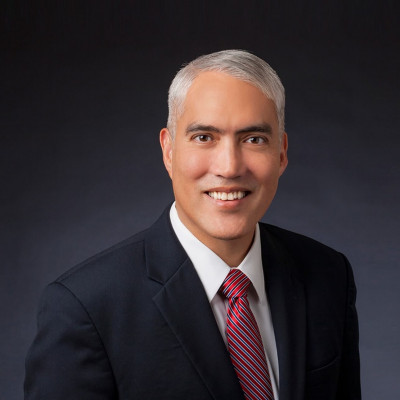
Photo of Mark M. Murakami

Mark Murakami practices in the firm’s Appeals, Business & Commercial Law, Construction Law, Land Use & Eminent Domain, Litigation & Dispute Resolution, Real Estate, and Wills, Trusts & Estates practice groups. His focus is on complex commercial disputes, land use negotiation and litigation, environmental, and general civil litigation. He has appeared in all federal and states courts in Hawaii, most of the administrative boards and commissions, and is licensed in the U.S. Supreme Court, Ninth Circuit Court of Appeals and Court of Federal Claims. He is rated “BV” by Martindale-Hubbell, receiving a rating of 4.4/5.0.

Mark is the 2025 President of the Hawaii State Bar Association (HSBA). Hawaii’s attorneys selected Mark for this leadership role in a statewide election in late 2022. He subsequently served as the 2023 Vice President and 2024 President-Elect. Founded in 1899, the HSBA is a mandatory professional organization for active and inactive licensed attorneys in Hawai. Its mission is to unite and inspire Hawaii’s lawyers to promote justice, serve the public and improve the legal profession. Mark was first elected by his peers to the 21-person HSBA Board in 2012 and was elected Treasurer from 2014 to 2017.

Mark has been appointed to a leadership position in the American Bar Association Section of Litigation. He will serve as Co-Chair for the Real Estate, Condemnation & Trust Litigation Committee and will be responsible for programming and publications for the nationwide membership.

Mark has been elected as the Hawaii member of Owners’ Counsel of America (OCA), an exclusive association of the nation’s leading eminent domain lawyers. Eminent domain is the legal process by which the government acquires private property for public uses, most often by forcing the owner to sell it. Membership in OCA is by invitation-only, and limited to a single member in each state. Members are selected for their experience and dedication in defending the constitutional rights of private property owners in eminent domain, inverse condemnation, regulatory takings, and other property rights matters.

Mark was elected a Fellow of the American College of Real Estate Lawyers (ACREL). Admission to the College is by invitation only to lawyers who are distinguished real estate practitioners and who have contributed to the improvement of real estate law through a combination of speaking, writing, teaching, and serving on relevant boards and commissions. Founded in 1978, the College is comprised of more than 1,000 lawyers distinguished for their skill, experience, and high standards of professional and ethical conduct in the practice of real estate law.

Mark was awarded the CRE (Counselor of Real Estate) credential by The Counselors of Real Estate, an international association of experienced real estate practitioners including appraisers, lawyers, and brokers, who provide expert advisory services to clients on complex real property and land-related matters. Membership in The Counselors of Real Estate is selective and is extended by invitation only, attesting to the practitioner’s expertise and proven competence in his or her chosen area of real estate.

Mark once again was selected by his peers for inclusion in the 2025 Edition of The Best Lawyers in America® for his work in Commercial Litigation, Eminent Domain & Condemnation Law, Land Use & Zoning Law, Litigation-Land Use & Zoning, Real Estate Law, Trusts & Estates, Litigation-Real Estate, and Litigation-Trusts & Estates. He was also named the Best Lawyers® 2013 Lawyer of the Year Eminent Domain & Condemnation Law. Mark has been selected by Super Lawyers for over 10 years.

Mark was the Valedictorian of the Class of 1999 from the University of Hawaii at Manoa, William S. Richardson School of Law where he served as Articles Editor of the University of Hawaii Law Review. He has received numerous academic awards, including: Dean’s Scholar, Porter Scholastic Award (2 times); Awards for highest grade in Property I, Torts I, Contracts I, Corporations, and Professional Responsibility; Kono Award for Academic Achievement; Phi Delta Phi Professional Responsibility Award; HSBA Real Property and Financial Services Section Award.

He is also a graduate of the U.S. Coast Guard Academy in New London, Connecticut. He served for 13 years on active duty before joining the U.S. Coast Guard Reserve in 2005. During his time on active duty, he served on three different Coast Guard cutters, including command of a patrol boat in California. He spent four years assigned to the Fourteenth Coast Guard District Legal Office, prosecuting courts-martial, litigating cases in federal court as a Special Assistant U.S. Attorney, and advising Coast Guard officials on maritime, criminal, environmental and international law issues.

Mark has been awarded the Legion of Merit, the Defense Meritorious Service Medal, two Meritorious Service Medals, the Joint Service Commendation Medal, two Coast Guard Commendation Medals and four Coast Guard Achievement Medals. He retired in July 2022 as a Captain, culminating thirty years of active duty and reserve commissioned service.

To view his blog on federal litigation and maritime law, in and around Hawaii and Oceania, please visit: www.hawaiioceanlaw.com.

Mark was born on Maui and raised in Kailua, Oahu. He is a graduate of Kailua High School and was active in the Castle Performing Arts Center.

With the news that the Arctic may be increasingly free of ice, there have been several policy statements in recent weeks regarding U.S. policy in the region. 

The day before President Bush left office, he issued a statement regarding U.S. policy in the Arctic (reported in Washington Post here).   The statement was published on the White House website, but appears to be under review.

Per the Commandant of the U.S. Coast Guard's statement:

The retreat of annual sea ice has created new areas of open water where the Coast Guard has statutory responsibilities. The new policy is recognition of changing conditions in the Arctic region and the implications for our Nation. This directive will guide our current operational activities in the region and guide the allocation of current and future resources to meet mission demands.

For some overview materials, here are some resources.  A Coast Guard officer published a great essay on the geo-political and strategic issues in the Arctic region in Joint Forces Quarterly.  Heritage published a report available here.

Definitely one to watch.  The Northwest Passage has been a storied navigational opportunity for centuries.  With transportation costs being driven by increasingly volatile oil prices, shorter navigational routes are in high demand.   Sending commercial ships to the Arctic seems inevitable, so the international community should tackle the policy issues sooner rather than later.

A bill, HR 21 (download bill), has been introduced calling for a National Ocean Policy with requirements for a Commission, comprehensive planning and even a postage stamp.

Per the bill:

The purpose of this Act is to secure, for present and future generations of people of the United States, the full range of ecological, economic, educational, social, cultural, nutritional, and recreational benefits of healthy marine ecosystems, by—

(1) establishing and implementing a National Ocean Policy;

(2) promoting ecologically sustainable ocean resource use and management by strengthening and empowering ocean governance on regional and Federal levels;

(3) promoting ecosystem-based approaches to management of United States ocean waters, coastal waters, and ocean resources; and

(4) establishing an ocean and Great Lakes conservation trust fund to support the purposes and policies of this Act.

Certainly one to watch during the upcoming Congressional session.

Last week, a bill was introduced (H.B. 593) to address concerns about the erosion of Kailua Beach, perhaps Hawaii's most cherished beaches.  Recently, the beach has been subject to unusual erosion leaving shoreline experts puzzled.

This bill directs the Board of Land and Natural Resources to adopt rules relating to the shoreline setback area and mauka (or landward in this case) extent of the conservation zone boundary.

Per the bill:

Accreted beach land, in the form of coastal dunes and dry beach area, is still an integral portion of the  each system.  Accreted land holds the fragile carbonate sands, which the active beach relies upon during periods of episodic erosion.  These same lands will once again transition back into active beach area as the chronic erosion present at the south end of Kailua beach migrates north and as sea-level rises.  As the shoreline migrates through accretion and erosion, so too does the conservation district boundary, where all submerged lands are zoned as resource sub-zone.  The accreted lands, originally within the conservation district, will not only return to the conservation district with subsequent erosion, but also have a significant impact on the function and health of the beach resource to be conserved and protected within the existing conservation district boundaries.  From a management perspective, it is more effective for one agency to steward the entire resource.  As such, the State has a clear interest, as it already manages the existing conservation district and it owns all the lands makai of private property boundaries, including a portion of the accreted lands.  As there are currently no shoreline structures on Kailua beach, with the exception of the boat ramp and ancillary structure at the south end of the beach, there is a significant opportunity for the State to proactively and comprehensively manage the coastal sediment and environmental systems from the nearshore waters to the mauka extent of the shoreline setback area in the best interest of the public, the resource, and the State.  This management scheme will not affect ownership of private property nor dictate the issuance of building permits from the city and county of Honolulu's department of planning and permitting, in conformance with special management area ordinances.

The purpose of this Act is to preserve the existing Kailua beach for the use and enjoyment of future generations.

A bill, H.R. 51 (download here), was introduced in the U.S. House of Representatives that would require the Fish and Wildlife Service to study the impacts of harvesting asian carp in the Great Lakes.

The bill’s purpose is:

To direct the Director of the United States Fish and Wildlife Service to conduct a study of the feasibility of a variety of approaches to eradicating Asian carp from the Great Lakes and their tributary and connecting waters.

Between electrified fences, posted here, and now harvesting, the federal and several state governments are exploring all options to eradicate this potent threat to the Great Lakes ecosystem.

Pacific Business News reported that the Cape Wind Environmental Impact Statement was released today. 

The federal Minerals Management Service does have the EIS available for review, here.

This project and its handling by the federal and state governments, along with community groups, industry and the environmental groups, will be a benchmark for the possible

The EPA has relased a report, "Predicting Future Introductions of Nonindigenous Species to the Great Lakes" (website with downloads here). 

Per the EPA's website:

This report predicts the spread of aquatic nonindigenous species into the Great Lakes to help resource managers focus monitoring activities on particular species at the most vulnerable U.S. Great Lakes ports. The report also demonstrates the use of a habitat suitability model and ballast water discharge data to predict invasion potential.

Most coastal states with international shipping traffic have struggled to grapple with the vexing problem of invasive species.  Federal legislation and rulemaking have had fits and starts and several states have not waited for the federal government to act.  Certainly an issue to watch in the future.


The U.S. Department of Agriculture’s Animal and Plant Health Inspection Service issued a Finding of No Significant Impact (FONSI in enviromental parlance) related to the shipment of municipal solid waste from Hawaii to landfills in Oregon.  APHIS news release here.

Columbia Ridge Landfill Site Specific Environmental Assessment

Columbia Ridge EA – Biological Assessment

Columbia