
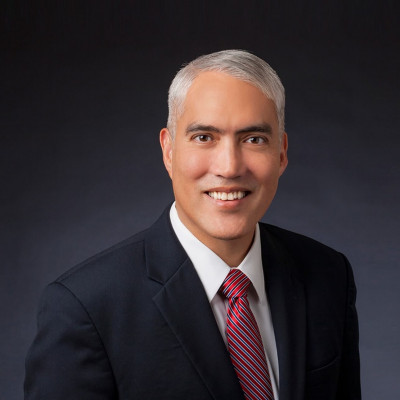
Photo of Mark M. Murakami

Mark Murakami practices in the firm’s Appeals, Business & Commercial Law, Construction Law, Land Use & Eminent Domain, Litigation & Dispute Resolution, Real Estate, and Wills, Trusts & Estates practice groups. His focus is on complex commercial disputes, land use negotiation and litigation, environmental, and general civil litigation. He has appeared in all federal and states courts in Hawaii, most of the administrative boards and commissions, and is licensed in the U.S. Supreme Court, Ninth Circuit Court of Appeals and Court of Federal Claims. He is rated “BV” by Martindale-Hubbell, receiving a rating of 4.4/5.0.

Mark is the 2025 President of the Hawaii State Bar Association (HSBA). Hawaii’s attorneys selected Mark for this leadership role in a statewide election in late 2022. He subsequently served as the 2023 Vice President and 2024 President-Elect. Founded in 1899, the HSBA is a mandatory professional organization for active and inactive licensed attorneys in Hawai. Its mission is to unite and inspire Hawaii’s lawyers to promote justice, serve the public and improve the legal profession. Mark was first elected by his peers to the 21-person HSBA Board in 2012 and was elected Treasurer from 2014 to 2017.

Mark has been appointed to a leadership position in the American Bar Association Section of Litigation. He will serve as Co-Chair for the Real Estate, Condemnation & Trust Litigation Committee and will be responsible for programming and publications for the nationwide membership.

Mark has been elected as the Hawaii member of Owners’ Counsel of America (OCA), an exclusive association of the nation’s leading eminent domain lawyers. Eminent domain is the legal process by which the government acquires private property for public uses, most often by forcing the owner to sell it. Membership in OCA is by invitation-only, and limited to a single member in each state. Members are selected for their experience and dedication in defending the constitutional rights of private property owners in eminent domain, inverse condemnation, regulatory takings, and other property rights matters.

Mark was elected a Fellow of the American College of Real Estate Lawyers (ACREL). Admission to the College is by invitation only to lawyers who are distinguished real estate practitioners and who have contributed to the improvement of real estate law through a combination of speaking, writing, teaching, and serving on relevant boards and commissions. Founded in 1978, the College is comprised of more than 1,000 lawyers distinguished for their skill, experience, and high standards of professional and ethical conduct in the practice of real estate law.

Mark was awarded the CRE (Counselor of Real Estate) credential by The Counselors of Real Estate, an international association of experienced real estate practitioners including appraisers, lawyers, and brokers, who provide expert advisory services to clients on complex real property and land-related matters. Membership in The Counselors of Real Estate is selective and is extended by invitation only, attesting to the practitioner’s expertise and proven competence in his or her chosen area of real estate.

Mark once again was selected by his peers for inclusion in the 2025 Edition of The Best Lawyers in America® for his work in Commercial Litigation, Eminent Domain & Condemnation Law, Land Use & Zoning Law, Litigation-Land Use & Zoning, Real Estate Law, Trusts & Estates, Litigation-Real Estate, and Litigation-Trusts & Estates. He was also named the Best Lawyers® 2013 Lawyer of the Year Eminent Domain & Condemnation Law. Mark has been selected by Super Lawyers for over 10 years.

Mark was the Valedictorian of the Class of 1999 from the University of Hawaii at Manoa, William S. Richardson School of Law where he served as Articles Editor of the University of Hawaii Law Review. He has received numerous academic awards, including: Dean’s Scholar, Porter Scholastic Award (2 times); Awards for highest grade in Property I, Torts I, Contracts I, Corporations, and Professional Responsibility; Kono Award for Academic Achievement; Phi Delta Phi Professional Responsibility Award; HSBA Real Property and Financial Services Section Award.

He is also a graduate of the U.S. Coast Guard Academy in New London, Connecticut. He served for 13 years on active duty before joining the U.S. Coast Guard Reserve in 2005. During his time on active duty, he served on three different Coast Guard cutters, including command of a patrol boat in California. He spent four years assigned to the Fourteenth Coast Guard District Legal Office, prosecuting courts-martial, litigating cases in federal court as a Special Assistant U.S. Attorney, and advising Coast Guard officials on maritime, criminal, environmental and international law issues.

Mark has been awarded the Legion of Merit, the Defense Meritorious Service Medal, two Meritorious Service Medals, the Joint Service Commendation Medal, two Coast Guard Commendation Medals and four Coast Guard Achievement Medals. He retired in July 2022 as a Captain, culminating thirty years of active duty and reserve commissioned service.

To view his blog on federal litigation and maritime law, in and around Hawaii and Oceania, please visit: www.hawaiioceanlaw.com.

Mark was born on Maui and raised in Kailua, Oahu. He is a graduate of Kailua High School and was active in the Castle Performing Arts Center.

The Washington-based Grays Harbor Ocean Energy Company has applied for a permit to construct an alternative energy facility on Penguin Bank, southwest of the island of Molokai. 

The Penguin Bank project description is here

The Company’s objective is published as: 

Our power project objective to generate up to 100 MW of wave power in a site that is 12 to 25 miles offshore on the Outer Continental Shelf.

The Project will have 100 offshore fixed three-leg platforms standing on the sea bed and raised about 50 feet above sea level. Wave Energy Converters will be built into each leg, for a total of 300 WECs. They are currently rated at 350kW power, and will generate up to 100 MW hydrokinetic power at peak, typically during winter months, and about 40 MW power on average. The seasonality of power generation matches well to the winter power demand.

What about Cape Wind?  That project’s Draft Environmental Impact Statement here.  Some of the controversy of the Cape Wind project is discussed here.  Visual sitings of Cape Wind project are available. 

Jan from Raising Islands had a good post here.

The two federal agencies currently exercising regulatory authority over offshore (>3 nautical miles from shoreline) are the Minerals Management Service (MMS) and the Federal Energy Regulatory Commission (FERC).  The latter recently issued a decision declaring its jurisdiction over these projects offshore, here.  Side note:  the MMS actually participated as a litigant in this decision, the Department of Justice Office of Legal Counsel probably needs to chime in, lest two federal agencies take contrary positions with the regulated public.  This is a good post on the subject:  http://www.carolynelefant1.typepad.com/renewablesoffshore/2008/11/the-ferc-mms-scuffle-continues.html

Most have not heard of these two federal agencies.  Per its website, MMS authority in this area:

Section 388 of the Energy Policy Act of 2005 (EPAct) amended the Outer Continental Shelf Lands Act to grant the Secretary of the U.S. Department of the Interior (Secretary) discretionary authority to issue leases, easements, or rights-of-way for activities on the Outer Continental Shelf that produce or support production, transportation, or transmission of energy from sources other than oil and gas. The Secretary delegated this authority to the Minerals Management Service, which has extensive experience in oil, gas and marine minerals (sand and gravel) offshore leasing. Examples of potential alternative energy projects include, but are not limited to: wind energy, wave energy, ocean current energy, solar energy, and hydrogen production.

Under this new authority, the MMS also may issue leases, easements, or rights-of-way for other OCS project activities that make alternate use of existing OCS facilities for “energy-related purposes or for other authorized marine-related purposes,” such as: offshore aquaculture, research, education, recreation, and support for offshore operations and facilities.

For the Cape Wind project, these are the other federal agencies with interests and regulatory oversight over parts of project.  

News reports suggest, and court pleadings confirm, that the California Sonar Case, a.k.a. Winter v. NRDC, has settled.

The NRDC news release sets forth the settlement terms:

1. It sets out a schedule for environmental compliance pursuant to which the Navy will prepare and issue environmental statements for sonar exercises and ranges around the world.

2. It requires public disclosure of previously classified information on sonar, including information that had been covered by protective order in NRDC v Winter. The Navy also agrees to provide plaintiffs a series of briefings on sonar compliance and mitigation-related issues.

3. The Navy agrees to fund $14.75 million dollars in new marine mammal research.

4. The settlement establishes a cooling off period to permit negotiation between plaintiffs and the Navy when future sonar disagreements arise.

5. The Navy agrees to pay $1.1 million dollars in attorney’s fees for settling both the 2005 lawsuit and a 2006 lawsuit regarding sonar use around Hawaii.

The dismissal pleadings are available here  and here.

My Resource Page for this case is here.

Hot off the Coast Guard Commandant's blog, the National Transportation Safety Board (NTSB) and the Coast Guard have updated their Memorandum of Understanding relating to marine casualty investigations.

No doubt prompted by the COSCO BUSAN incident in San Francisco Bay, the federal agencies agreed to a framework for the conduct of their separate investigations. 

The MOU is here. There must have been some ruffled feathers with respect to media outreach that the agreement aims to appease:

NTSB and USCG agree that regardless of which agency leads an investigation, the other agency may participate as an equal partner in gathering evidence and establishing facts, with due consideration to keeping their analysis and conclusions separate and independent. In those  cases where the public interest demands on-scene live media engagements or written press releases, the parties agree that the lead investigative agency will act as the sole spokesperson  for casualty investigation information and activity, and press conferences and press releases will identify the lead and supporting investigating agencies. Participation by the non-lead  investigative agency in any press conference is encouraged. Once the on-scene portion of the investigation is complete, both agencies may issue independent press releases and conduct any press conferences as necessary.

NTSB and USCG agree that an NTSB Board Member will not attend the scene of an investigation led by USCG and that NTSB may hold a public hearing on any casualty that it investigates.

NTSB and USCG agree that USCG may conduct a Marine Board of Investigation on any casualty it investigates, and will generally avoid convening the Marine Board until after NTSB has completed the on scene portion of any NTSB led investigation.

According to news reports, here, the Coast Guard has "approved" the electrification of a waterborne fence to keep Asian Carp out of the Great Lakes.  A Congressional coalition had concerns over the delays in electrifying the fence:

Less than a week after a group of 29 U.S. senators and representatives wrote a letter demanding answers as to why an electric Asian carp barrier built in 2006 to keep the monstrous fish from invading the Great Lakes hadn’t been turned on, the Coast Guard has given it the green light.

The Coast Guard published some relevant documents, via their twitter feed.

Fact sheet, here.  Coast Guard white paper, here

Letter from Army Corps of Engineers to Coast Guard, here.  Army press release, here.

October 31, 2008 letter from Council of Governors, here.  Homeland Security's reponse, here.

Attempts to keep invasive species out of the Great Lakes frequently end up in litigation, with groups suing the federal government to prompt action and shippers suing State authorities when they invade on the province of the federal government. 

On Somali pirates, my perspective. It seems there are two practical options: first, identify a neighboring state that has the capacity and political will to try and imprison suspected pirates; or second, obtain the shipping nations agreement that they will try the suspected terrorist upon apprehension by the world’s naval powers. While some nations, like the U.S., have the capability to interdict and stop pirate attacks, any comprehensive strategy must involve the endgame.

From a geo-political standpoint, naval patrols, and even interdiction and arrest, are only a small part of the solution.  The Pentagon seems to agree, here.  For sure, a robust naval presence allows for individual ships to remain unmolested by violence, but what about  then?  Pursuit ashore? The Commander of the U.S. Navy’s Fifth Fleet, Vice Admiral William E. Gortney expressed qualms about pursuing suspected pirates ashore, here.

The U.S. Naval Institute’s Proceedings this month contains a timely, insightful bank of essays on this issue:  the JAG’s perspective, hereherehere

The U.S. Supreme Court granted the petition for a writ of certiorari in the City of Valdez tax case, posted earlier here.

The question presented is:

1. Whether a municipal personal property tax that falls exclusively on large vessels using the municipality’s harbor violates the Tonnage Clause of the Constitution, art. I, § 10, cl. 3.

2. Whether a municipal personal property tax that is apportioned to reach the value of property with an out-of-State domicile for periods when the property is on the high seas or otherwise outside the taxing jurisdiction of any State violates the Commerce and Due Process Clauses of the Constitution.

Thanks to Alaska counsel for Polar Tankers, Leon Vance, for the tip.