
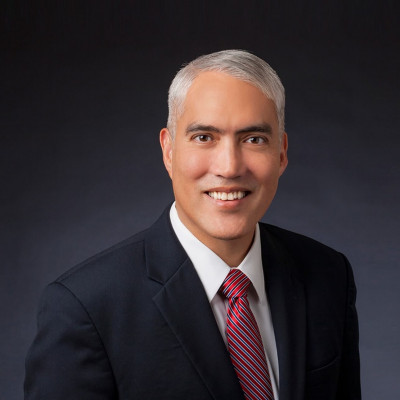
Photo of Mark M. Murakami

Mark Murakami practices in the firm’s Appeals, Business & Commercial Law, Construction Law, Land Use & Eminent Domain, Litigation & Dispute Resolution, Real Estate, and Wills, Trusts & Estates practice groups. His focus is on complex commercial disputes, land use negotiation and litigation, environmental, and general civil litigation. He has appeared in all federal and states courts in Hawaii, most of the administrative boards and commissions, and is licensed in the U.S. Supreme Court, Ninth Circuit Court of Appeals and Court of Federal Claims. He is rated “BV” by Martindale-Hubbell, receiving a rating of 4.4/5.0.

Mark is the 2025 President of the Hawaii State Bar Association (HSBA). Hawaii’s attorneys selected Mark for this leadership role in a statewide election in late 2022. He subsequently served as the 2023 Vice President and 2024 President-Elect. Founded in 1899, the HSBA is a mandatory professional organization for active and inactive licensed attorneys in Hawai. Its mission is to unite and inspire Hawaii’s lawyers to promote justice, serve the public and improve the legal profession. Mark was first elected by his peers to the 21-person HSBA Board in 2012 and was elected Treasurer from 2014 to 2017.

Mark has been appointed to a leadership position in the American Bar Association Section of Litigation. He will serve as Co-Chair for the Real Estate, Condemnation & Trust Litigation Committee and will be responsible for programming and publications for the nationwide membership.

Mark has been elected as the Hawaii member of Owners’ Counsel of America (OCA), an exclusive association of the nation’s leading eminent domain lawyers. Eminent domain is the legal process by which the government acquires private property for public uses, most often by forcing the owner to sell it. Membership in OCA is by invitation-only, and limited to a single member in each state. Members are selected for their experience and dedication in defending the constitutional rights of private property owners in eminent domain, inverse condemnation, regulatory takings, and other property rights matters.

Mark was elected a Fellow of the American College of Real Estate Lawyers (ACREL). Admission to the College is by invitation only to lawyers who are distinguished real estate practitioners and who have contributed to the improvement of real estate law through a combination of speaking, writing, teaching, and serving on relevant boards and commissions. Founded in 1978, the College is comprised of more than 1,000 lawyers distinguished for their skill, experience, and high standards of professional and ethical conduct in the practice of real estate law.

Mark was awarded the CRE (Counselor of Real Estate) credential by The Counselors of Real Estate, an international association of experienced real estate practitioners including appraisers, lawyers, and brokers, who provide expert advisory services to clients on complex real property and land-related matters. Membership in The Counselors of Real Estate is selective and is extended by invitation only, attesting to the practitioner’s expertise and proven competence in his or her chosen area of real estate.

Mark once again was selected by his peers for inclusion in the 2025 Edition of The Best Lawyers in America® for his work in Commercial Litigation, Eminent Domain & Condemnation Law, Land Use & Zoning Law, Litigation-Land Use & Zoning, Real Estate Law, Trusts & Estates, Litigation-Real Estate, and Litigation-Trusts & Estates. He was also named the Best Lawyers® 2013 Lawyer of the Year Eminent Domain & Condemnation Law. Mark has been selected by Super Lawyers for over 10 years.

Mark was the Valedictorian of the Class of 1999 from the University of Hawaii at Manoa, William S. Richardson School of Law where he served as Articles Editor of the University of Hawaii Law Review. He has received numerous academic awards, including: Dean’s Scholar, Porter Scholastic Award (2 times); Awards for highest grade in Property I, Torts I, Contracts I, Corporations, and Professional Responsibility; Kono Award for Academic Achievement; Phi Delta Phi Professional Responsibility Award; HSBA Real Property and Financial Services Section Award.

He is also a graduate of the U.S. Coast Guard Academy in New London, Connecticut. He served for 13 years on active duty before joining the U.S. Coast Guard Reserve in 2005. During his time on active duty, he served on three different Coast Guard cutters, including command of a patrol boat in California. He spent four years assigned to the Fourteenth Coast Guard District Legal Office, prosecuting courts-martial, litigating cases in federal court as a Special Assistant U.S. Attorney, and advising Coast Guard officials on maritime, criminal, environmental and international law issues.

Mark has been awarded the Legion of Merit, the Defense Meritorious Service Medal, two Meritorious Service Medals, the Joint Service Commendation Medal, two Coast Guard Commendation Medals and four Coast Guard Achievement Medals. He retired in July 2022 as a Captain, culminating thirty years of active duty and reserve commissioned service.

To view his blog on federal litigation and maritime law, in and around Hawaii and Oceania, please visit: www.hawaiioceanlaw.com.

Mark was born on Maui and raised in Kailua, Oahu. He is a graduate of Kailua High School and was active in the Castle Performing Arts Center.

The Wall Street Journal Law Blog posts an interesting article (here) about the role of private attorneys in the negotiation for the release of pirated vessels in Somalia.   According to the WSJ:

But there’s one job lawyers say they won’t handle. “We won’t get in that speedboat and deliver the suitcase of money,” says Stephens. “I don’t think anyone here agreed to do that when they signed on at the firm.”

My earlier post on Somalia piracy here.

The U.S. Court of Appeals for the Sixth Circuit (Kentucky, Michigan, Ohio, Tennessee) recently upheld Michigan's statute asserting jurisdiction and regulatory powers over all vessels (including foreign flagged ones) in pursuit of Michigan's aim to protect its waters from aquatic invasive nuisance species.  Opinion in Fednav v. Chester, here.

Michigan, like California and Hawaii, has decided to not wait for federal government action to address invasive species.  Michigan's statute provides:

Beginning January 1, 2007, all oceangoing vessels engaging in port operations in this state shall obtain a permit from the department. The department shall issue a permit for an oceangoing vessel only if the applicant can demonstrate that the oceangoing vessel will not discharge aquatic nuisance species or if the oceangoing vessel discharges ballast water or other waste or waste effluent, that the operator of the vessel will utilize environmentally sound technology and methods, as determined by the [Michigan Department of Environmental Quality], that can be used to prevent the discharge of aquatic nuisance species.

Mich. Comp. Laws § 324.3112(6).

Several shipping companies brought suit against the State of Michigan to invalide the statute.  The shipping companies asserted that they had standing to assert claims of invalidity of Michigan's statute, that Michigan's statute was preempted by federal law, and that the statute was unconstitutional as violative of the U.S. Constitution's commerce clause.  The Court found no preemption, express or implied, nor any constitutional violation dismissing the argument that because the federal government has two statutes regarding shipboard ballast waters, Michigan's law could not stand.

The seminal case in this area is U.S. v. Locke, also known as the Intertanko decision.  The U.S. Supreme Court struck down Washington's regulations of oil tankers transiting its waters as being preempted by federal law.  The decision's clause by clause review of the federal statute seems to lead the Sixth Circuit to its conclusion:  Locke is limited to a rigid statutory analysis and not a "metaphysical one."

This case would be a good case for the U.S. Supreme Court to take on cert because the lower courts have grappled with the applicability of Locke and while the federal government has not expeditiously promulgated regulations to deal with these vexing environmental issues, several states have impinged on the federal government's constitutional turf to address the problems themselves.

The Honolulu Advertiser published an Op-Ed article written by Robert Thomas and myself outlining some of the impacts and ramifications of the Winter v. NRDC decision.  The article is provided below:

The United States has done more than any other country to protect whales, porpoises, seals and other marine mammals. In 1973, for example, Congress enacted the Marine Mammal Protection Act, a comprehensive law prohibiting hunting, killing, or even harassing them.

On Nov. 12, the U.S. Supreme Court balanced protecting marine mammals with the Navy's use of sonar to detect silent diesel-electric submarines. In Winter v. Natural Resources Defense Council, the court voided strict rules imposed on sonar training in Southern California waters, declaring judges should hesitate before second-guessing the Navy's judgment.

Environmentalists claimed mid-frequency active (MFA) sonar frightens or injures whales. The lower courts enjoined sonar use within 12 miles of California's coastline, or if whales were spotted within 1.2 miles of any ship.

The courts rejected the assertion these limitations interfered with the Navy's use of MFA sonar to detect submarines designed to avoid discovery by other types of sonar.

The Navy employs two types of sonar: passive sonar listens for sounds emitted by submarines; active sonar transmits sound and listens for a reflection. Active sonar is the most effective means to detect diesel-electric submarines that are deployed by China, North Korea, and Iran, and are specifically designed for silent running. A single torpedo can sink an aircraft carrier with a crew of 4,000. These submarines can also carry nuclear, biological or chemical weapons.

Nine retired admirals with more than 300 years of service among them and a coalition of support organizations including the Navy League filed a Supreme Court brief emphasizing the threat from silent submarines, and that sailors should not be precluded from training realistically. No one questioned the need to train, but under the lower courts' restrictions, the first time a sonar operator could fully deploy sonar equipment is when it counted and there was no margin for error.

Some blame active sonar for whale beachings and injuries, although there has not been any documented case of harming a marine mammal in the 40-plus years sonar has been used in the Southern California training area. These animals inhabit the world's oceans, and Congress understood the desire to protect them may conflict with national defense.

In 2004, it amended the MMPA allowing the secretary of defense to exempt actions of the Department of Defense if necessary. This exemption was enacted following an earlier California case in which environmentalists challenged the Navy's use of low-frequency active sonar. The exemption allows sonar training even if it might, in some circumstances, injure marine mammals.

Even with this exemption, the Navy takes extraordinary measures to minimize any effects MFA sonar may have. Fleet-wide measures include extra lookouts with enhanced search procedures, limitations on transmission levels within 1,000 yards of mammals and additional powering down of sonar when mammals are inside 500 yards from sonar equipment.

But these measures were not enough for the lower courts, which rejected the judgment of military commanders and the legislative and executive branches that sonar would not likely cause harm, and even if it did, the need to prepare the Navy was, on balance, more important. In effect, the courts substituted their judgment for that of experienced professionals in how to best train to hunt sophisticated enemy submarines.

The Supreme Court recognized that judges haven't the expertise to evaluate threats, and the injunction unnecessarily put sailors, and the nation they defend, at risk. The court noted, "neither the members of this court nor most federal judges begin the day with briefings that may describe new and serious threats to our nation and its people." The need to train sonar operators for deployment is of paramount public interest; it is not worth jeopardizing the fleet with inadequate training just to allay environmental groups' fears that their desire to "take whale watching trips, observe marine mammals underwater, conduct scientific research on marine mammals, and photograph these animals in their natural habitats," might be harmed.

The court is right. The Navy and its leaders — not judges — should determine how best to defend our nation from silent-running submarines.

My resource page with the decision, briefs, coverage and pleadings is here. 


On Somalia, lots of news these days and a lot of vexing issues to grapple over.  As with any complex international issue, comprehensive easy solutions are not manifest.  While military force and naval patrols may physically interdict the pirates, what then?  Somalia appears to have no functioning government or judicial system that can prosecute the offenders.  Under international law (both customary and treaty), piracy is a universal crime and any nation can prosecute the offenders.  But, the naval powers of the world, especially the United States, are understandably reluctant to exercise criminal jurisdiction over these Somali bandits (read: we don't want them in our federal courts).  As the U.S. Coast Guard Commandant's blog post notes, what is the endgame?  I will post separately about the legal authorities for such action.

Plainly, we are reaching a tipping point.  The major shipping companies are pushing for a blockade of Somalia, here.  The U.S. government likely will not stand for attacks on U.S. flagged ships, like this one.  Will the world tolerate the collateral consequences of a shooting war against the pirates (like here)? 

The U.N. just passed a resolution which looks to be a call to arms: 

Calls upon

States and regional organizations that have the capacity to do so, to take part actively in the fight against piracy and armed robbery at sea off the coast of Somalia, in particular, consistent with this resolution and relevant international law, by deploying naval vessels and military aircraft, and through seizure and disposition of boats, vessels, arms and other related equipment used in the commission of piracy and armed robbery off the coast of Somalia, or for which there is reasonable ground for suspecting such use

Decides

that for a period of 12 months from the date of this resolution States and regional organizations cooperating with the TFG in the fight against piracy and armed robbery at sea off the coast of Somalia, for which advance notification has been provided by the TFG to the Secretary-General, may:

(a) Enter into the territorial waters of Somalia for the purpose of repressing acts of piracy and armed robbery at sea, in a manner consistent with such action permitted on the high seas with respect to piracy under relevant international law; and

(b) Use, within the territorial waters of Somalia, in a manner consistent withsuch action permitted on the high seas with respect to piracy under relevant international law, all necessary means to repress acts of piracy and armed robbery at sea;

More to follow.  Stay tuned.