
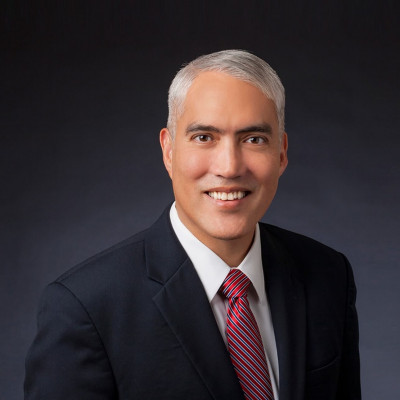
Photo of Mark M. Murakami

Mark Murakami practices in the firm’s Appeals, Business & Commercial Law, Construction Law, Land Use & Eminent Domain, Litigation & Dispute Resolution, Real Estate, and Wills, Trusts & Estates practice groups. His focus is on complex commercial disputes, land use negotiation and litigation, environmental, and general civil litigation. He has appeared in all federal and states courts in Hawaii, most of the administrative boards and commissions, and is licensed in the U.S. Supreme Court, Ninth Circuit Court of Appeals and Court of Federal Claims. He is rated “BV” by Martindale-Hubbell, receiving a rating of 4.4/5.0.

Mark is the 2025 President of the Hawaii State Bar Association (HSBA). Hawaii’s attorneys selected Mark for this leadership role in a statewide election in late 2022. He subsequently served as the 2023 Vice President and 2024 President-Elect. Founded in 1899, the HSBA is a mandatory professional organization for active and inactive licensed attorneys in Hawai. Its mission is to unite and inspire Hawaii’s lawyers to promote justice, serve the public and improve the legal profession. Mark was first elected by his peers to the 21-person HSBA Board in 2012 and was elected Treasurer from 2014 to 2017.

Mark has been appointed to a leadership position in the American Bar Association Section of Litigation. He will serve as Co-Chair for the Real Estate, Condemnation & Trust Litigation Committee and will be responsible for programming and publications for the nationwide membership.

Mark has been elected as the Hawaii member of Owners’ Counsel of America (OCA), an exclusive association of the nation’s leading eminent domain lawyers. Eminent domain is the legal process by which the government acquires private property for public uses, most often by forcing the owner to sell it. Membership in OCA is by invitation-only, and limited to a single member in each state. Members are selected for their experience and dedication in defending the constitutional rights of private property owners in eminent domain, inverse condemnation, regulatory takings, and other property rights matters.

Mark was elected a Fellow of the American College of Real Estate Lawyers (ACREL). Admission to the College is by invitation only to lawyers who are distinguished real estate practitioners and who have contributed to the improvement of real estate law through a combination of speaking, writing, teaching, and serving on relevant boards and commissions. Founded in 1978, the College is comprised of more than 1,000 lawyers distinguished for their skill, experience, and high standards of professional and ethical conduct in the practice of real estate law.

Mark was awarded the CRE (Counselor of Real Estate) credential by The Counselors of Real Estate, an international association of experienced real estate practitioners including appraisers, lawyers, and brokers, who provide expert advisory services to clients on complex real property and land-related matters. Membership in The Counselors of Real Estate is selective and is extended by invitation only, attesting to the practitioner’s expertise and proven competence in his or her chosen area of real estate.

Mark once again was selected by his peers for inclusion in the 2025 Edition of The Best Lawyers in America® for his work in Commercial Litigation, Eminent Domain & Condemnation Law, Land Use & Zoning Law, Litigation-Land Use & Zoning, Real Estate Law, Trusts & Estates, Litigation-Real Estate, and Litigation-Trusts & Estates. He was also named the Best Lawyers® 2013 Lawyer of the Year Eminent Domain & Condemnation Law. Mark has been selected by Super Lawyers for over 10 years.

Mark was the Valedictorian of the Class of 1999 from the University of Hawaii at Manoa, William S. Richardson School of Law where he served as Articles Editor of the University of Hawaii Law Review. He has received numerous academic awards, including: Dean’s Scholar, Porter Scholastic Award (2 times); Awards for highest grade in Property I, Torts I, Contracts I, Corporations, and Professional Responsibility; Kono Award for Academic Achievement; Phi Delta Phi Professional Responsibility Award; HSBA Real Property and Financial Services Section Award.

He is also a graduate of the U.S. Coast Guard Academy in New London, Connecticut. He served for 13 years on active duty before joining the U.S. Coast Guard Reserve in 2005. During his time on active duty, he served on three different Coast Guard cutters, including command of a patrol boat in California. He spent four years assigned to the Fourteenth Coast Guard District Legal Office, prosecuting courts-martial, litigating cases in federal court as a Special Assistant U.S. Attorney, and advising Coast Guard officials on maritime, criminal, environmental and international law issues.

Mark has been awarded the Legion of Merit, the Defense Meritorious Service Medal, two Meritorious Service Medals, the Joint Service Commendation Medal, two Coast Guard Commendation Medals and four Coast Guard Achievement Medals. He retired in July 2022 as a Captain, culminating thirty years of active duty and reserve commissioned service.

To view his blog on federal litigation and maritime law, in and around Hawaii and Oceania, please visit: www.hawaiioceanlaw.com.

Mark was born on Maui and raised in Kailua, Oahu. He is a graduate of Kailua High School and was active in the Castle Performing Arts Center.

On Wednesday, November 19 at noon, we will be hosting the Hawaii State Bar Association Admiralty Section's quarterly meeting at Damon Key.  All members of the Hawaii State Bar Association are welcome.

The topic for discussion will be vessel documentation, an area full of new developments.  The speaker will be Captain Fred Tucher, who recently retired

Piracy off the coast of Somalia is getting a lot of press recently.  The recent piratical takeover of a ship laden with tanks and munitions is prompting concerns and debate between the world's shippers and the countries affected.  France, Ukraine, North Korea, and now Denmark all have had ships taken in the last several years.  It seems that NATO and perhaps the United States will need to have an increased maritime presence to provide security for the vital sea lane.

The United Nations has even passed resolutions which squarely infringe on the sovereignty of Somalia, such as it is.  Resolution 1816, adopted June 2008 (recently renewed by Resolution 1838, adopted October 2008 ) provided that the Security Council:

Decides that for a period of six months from the date of this resolution, States cooperating with the TFG in the fight against piracy and armed robbery at sea off the coast of Somalia, for which advance notification has been provided by the TFG to the Secretary-General, may:

(a) Enter the territorial waters of Somalia for the purpose of repressing acts of piracy and armed robbery at sea, in a manner consistent with such action permitted on the high seas with respect to piracy under relevant international law; and

(b) Use, within the territorial waters of Somalia, in a manner consistent with action permitted on the high seas with respect to piracy under relevant international law, all necessary means to repress acts of piracy and armed robbery…

The Shipping coalition, in their releases here, here suggest that governmental, and not private security, response is warranted.   The world's major maritime insurer, Lloyds of London, began issuing risk policies including private security teams here.

The French have shown a willingness to go farther than the territorial sea to apprehend pirates:

Earlier Somalia pirate posts here, here and here, here.

[Please excuse the quick post, but I am on active duty with the Coast Guard Reserve for the next two weeks.]

The Supreme Court just granted a cert. petition to address the issue of punitive damages in Jones Act cases, here

Per SCOTUSBLOG, the issue below is:

In the new case involving the rights of an injured seaman (Atlantic Sounding, et al., v. Townsend, 08-214), the Court stepped in to resolve a conflict in lower courts on whether punitive damages are available for a shipboard worker hurt on the job if the owner or operator denies “maintenance and cure” payments.  Maintenance, in this context, means a basic living allowance and wages that a seaman otherwise would have earned, and cure means benefits that cover medical needs.

The appeal contends that the two laws that provide remedies for seamen’s injuries or death on the job — the Jones Act and the Death on the High Seas Act — do not cover any damages other than the seaman’s own direct loss; in other words, they do not cover “non-pecuniary damages.”  The appeal asserts that the Supreme Court has made clear that benefits in the maritime industry should be uniform across the country, and should depend mainly on what Congress has authorized in legislation.

More to follow.

The opposition briefing is complete in the UFO Chuting case.

The State of Hawaii's Brief in Opposition is here.

The Solicitor General's office filed its Brief in Opposition is here

My colleagues, Robert Thomas and Christi-Anne Kudo Chock, and I filed an amicus brief on behalf of Hawaii's Ocean Tourism Coalition in support of the Petition for